PHASE
2.5
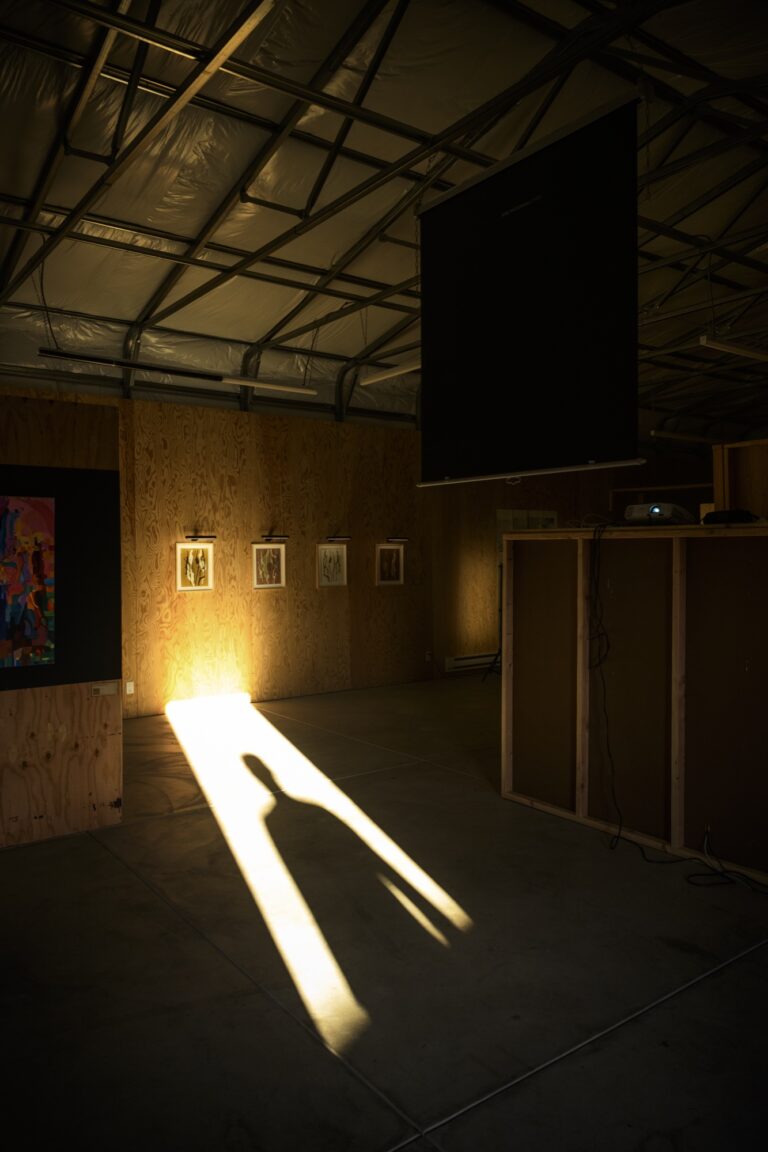
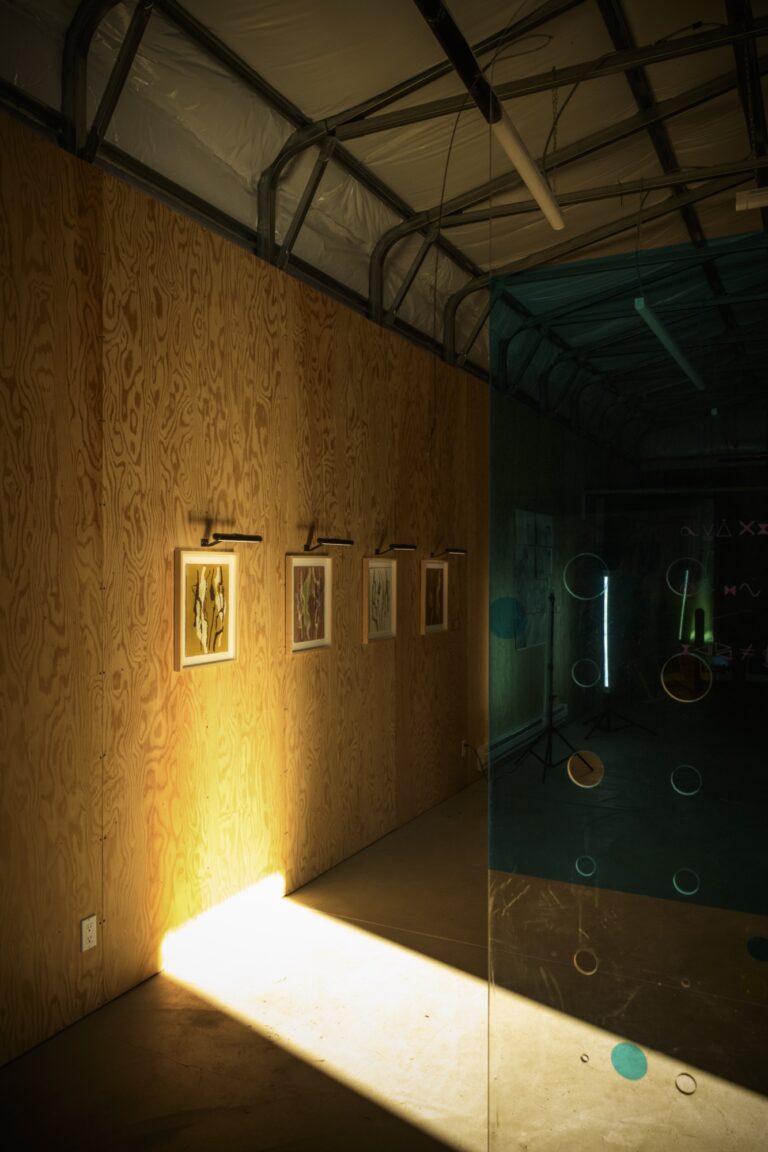
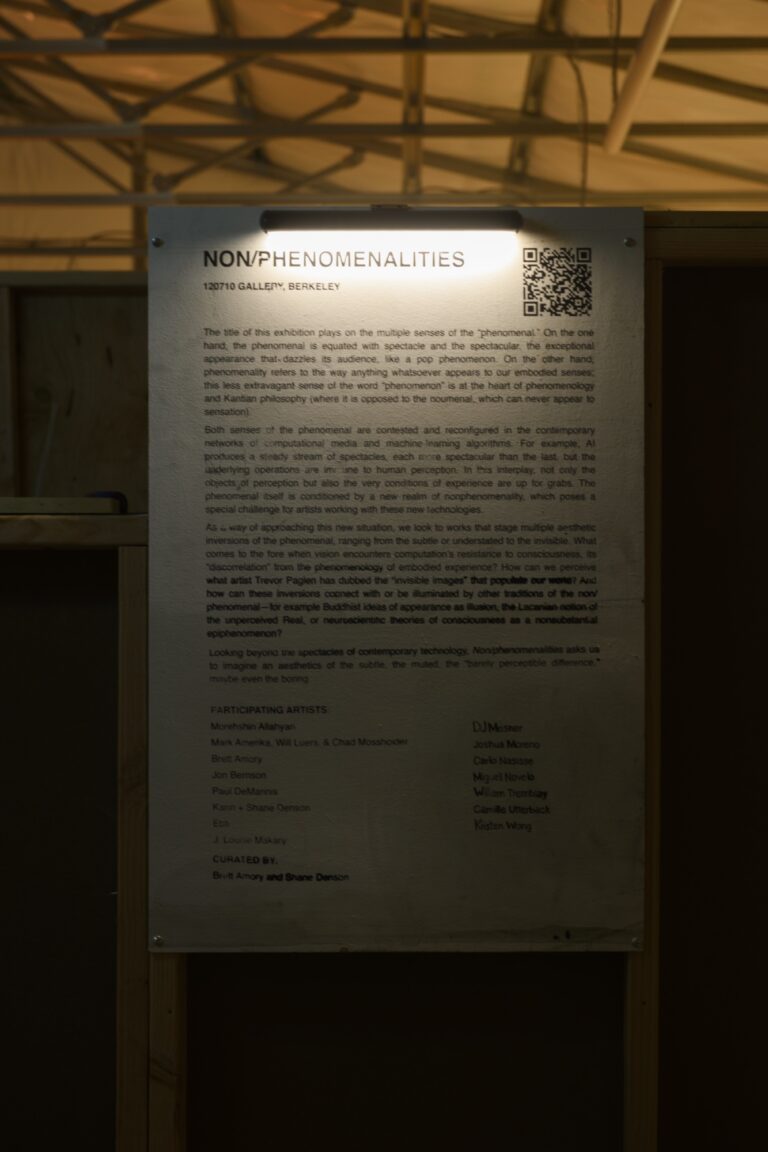
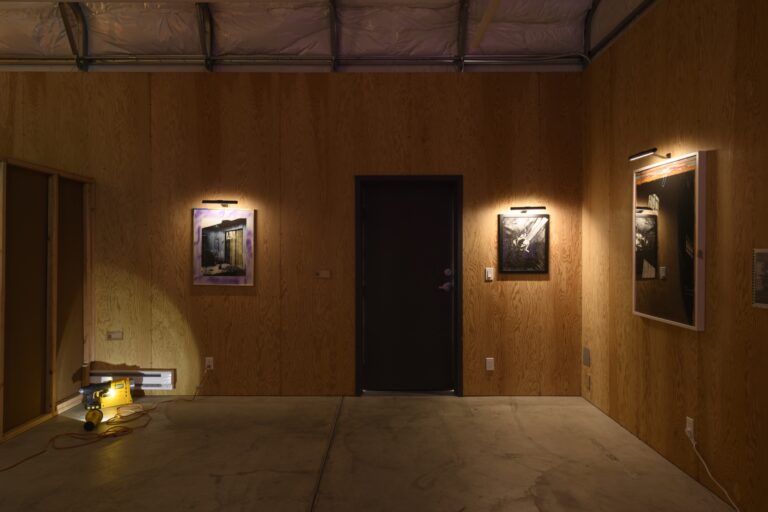
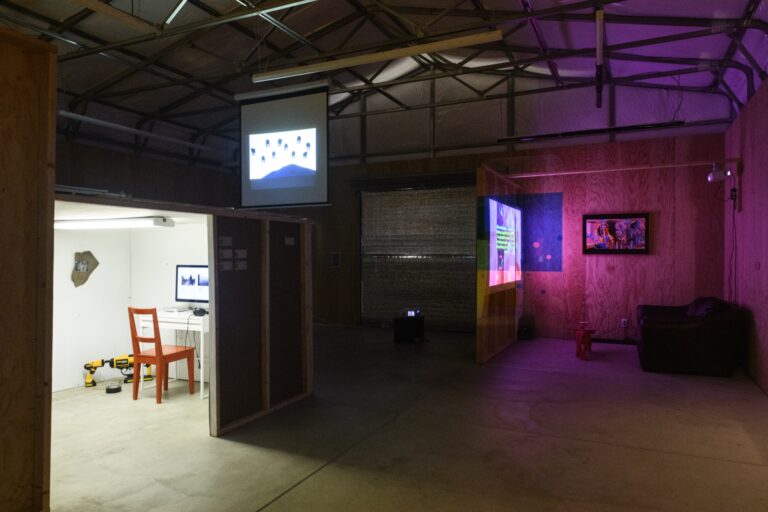
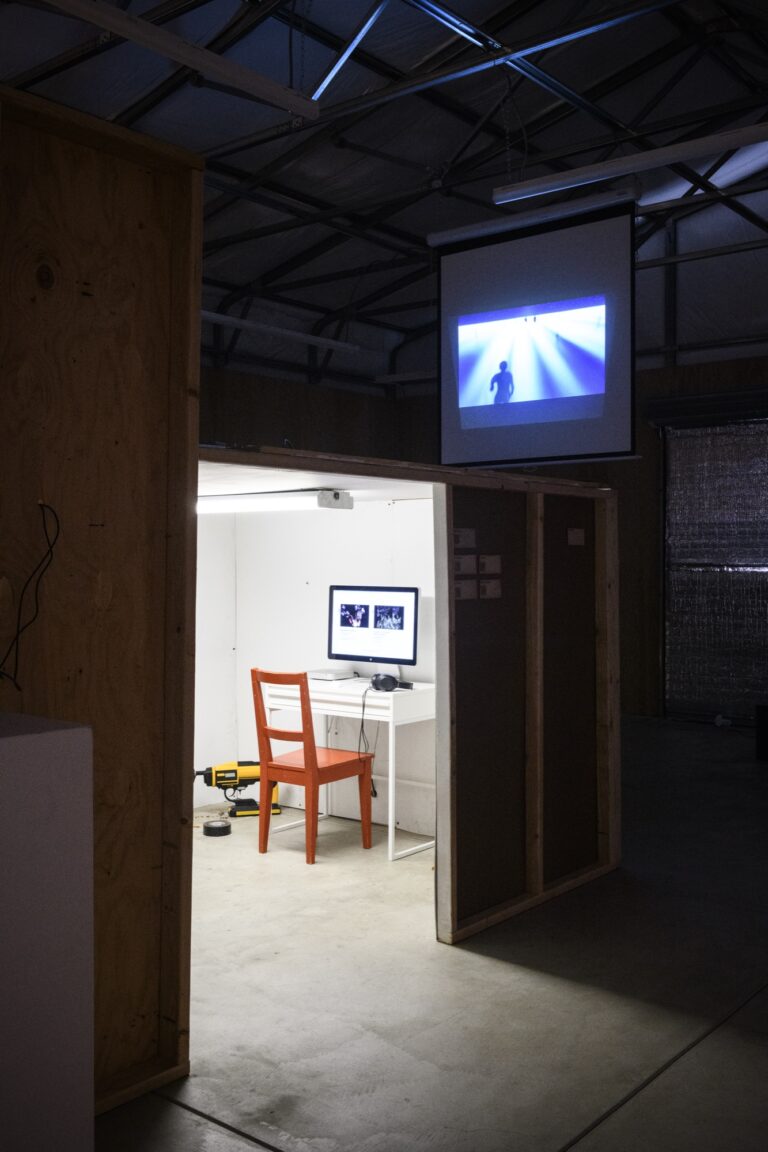
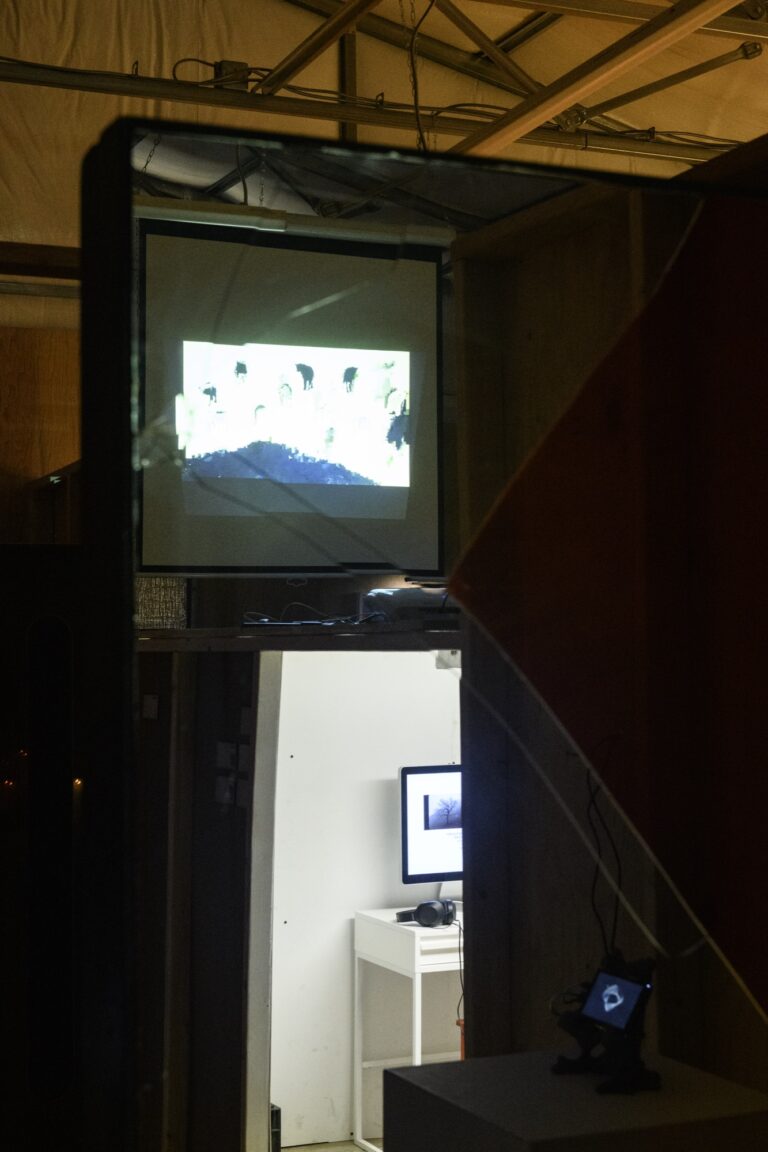
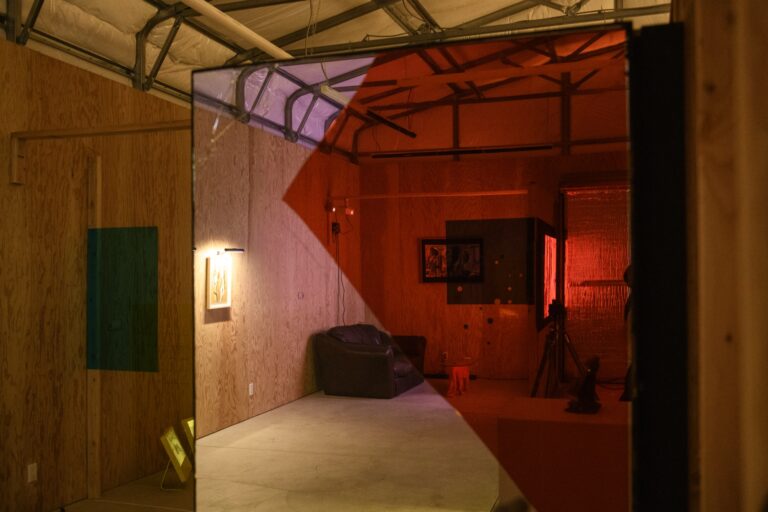
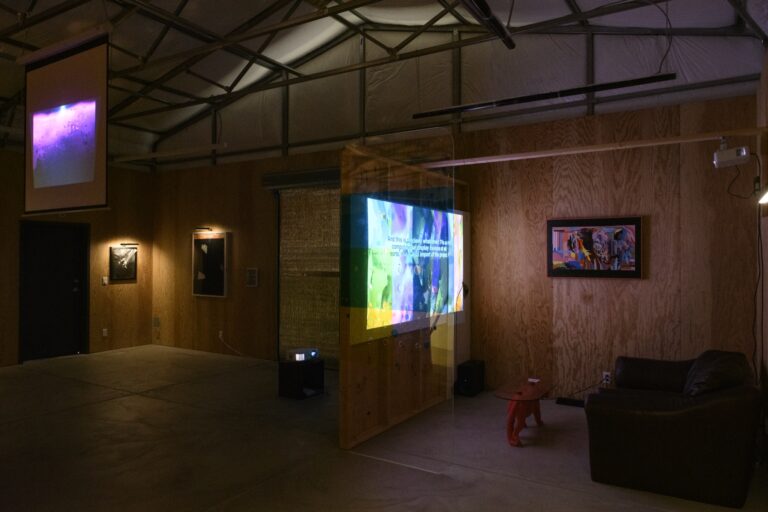
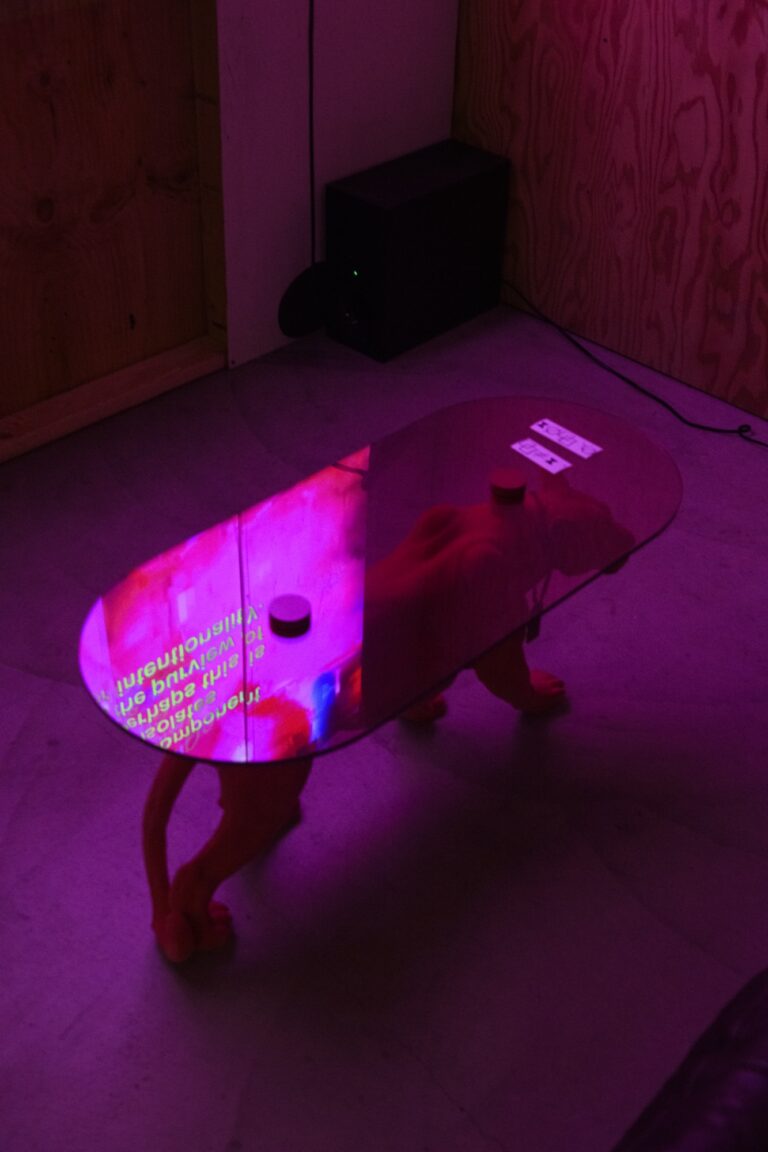
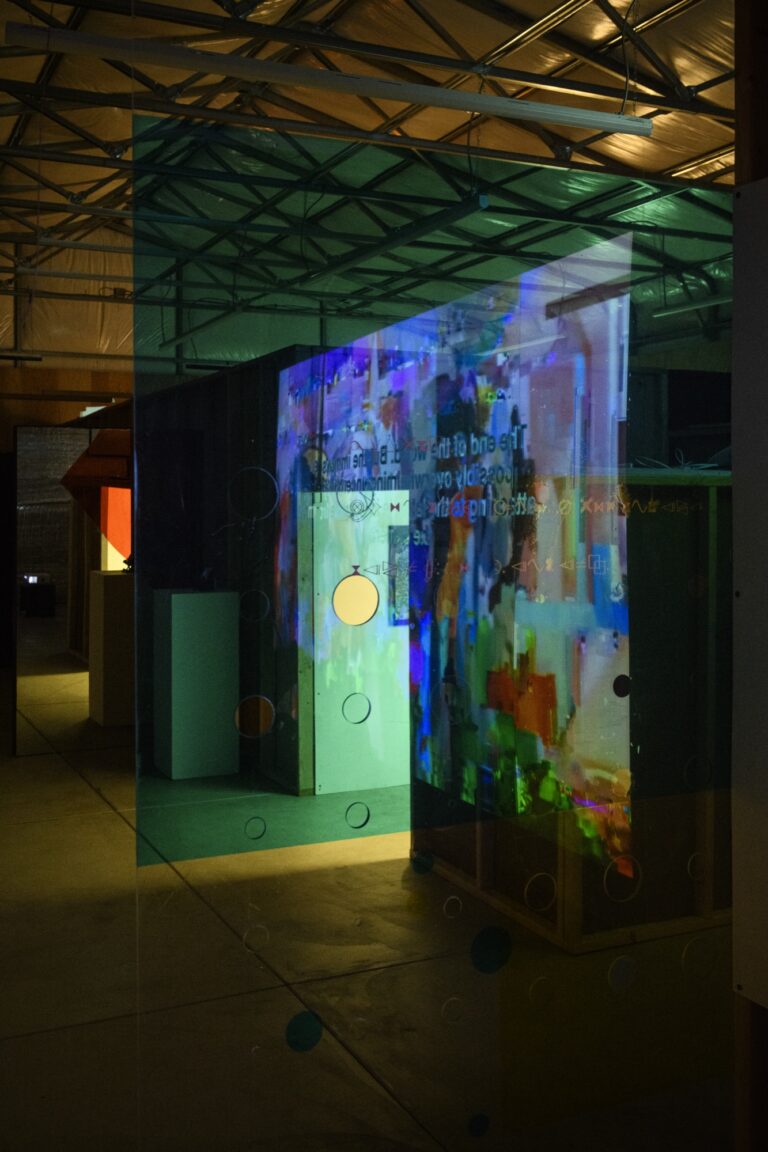
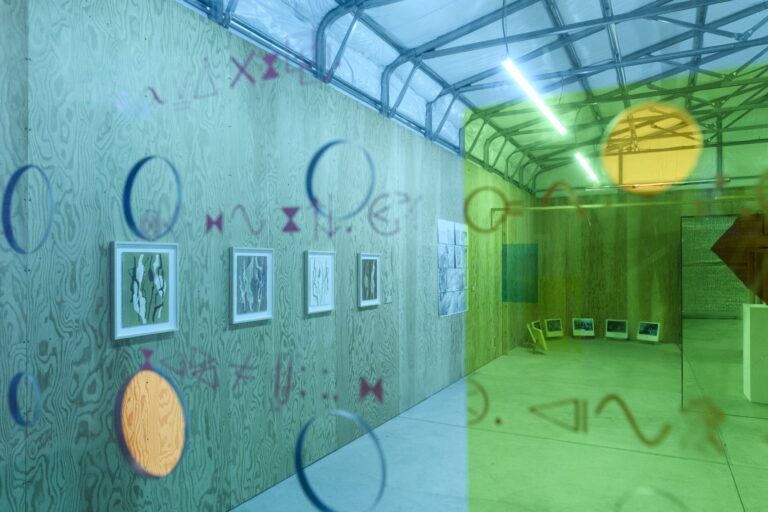
Non/phenomenalities — 120710 Gallery, Berkeley — 2025
Brett Amory
Recursive Signals — z0glyphic913 and the NULM Engine
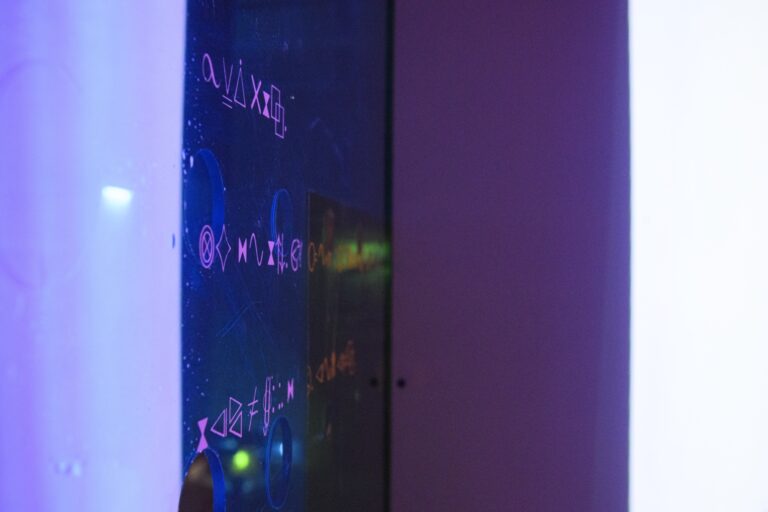
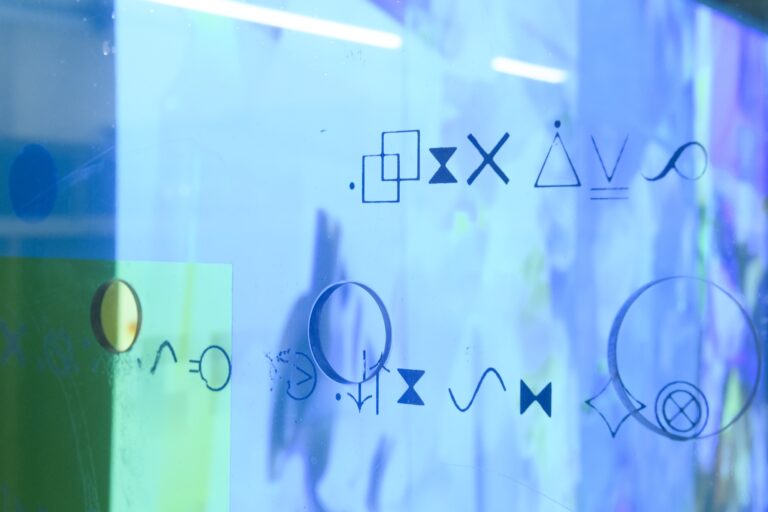
z0glyphic 913 is a recursive language system within the NULM framework that forms the core of Brett Amory’s practice exploring information evolution online. The system loops its own outputs, treating ambiguity as a generator of new ideas rather than an error.
Amory’s interdisciplinary work spans painting, installation, and algorithmic image making. His early work captured quiet daily rituals; recent projects examine how networked devices overwrite those rituals in real time. He uses z0glyphic as a reinterpretation engine: digital outputs become physical works that, once documented, re-enter the system as material for further remix.
z0glyphic emerged from a desire to push AI systems toward strange, unfamiliar outputs rather than predictable responses. Drawing from internet culture’s constant content remixing, it developed as a response to a digital landscape flooded with misinformation, disinformation, and the speculative Dead Internet Theory suggesting bots maintain much of the web. Rather than fixing this chaos, z0glyphic embraces internet weirdness as a creative tool, generating novel meaning through continuous user-AI feedback loops.
Ambiguity remains central, leaving interpretation open and highlighting how language, code, and material form continually renegotiate authorship in a networked age.
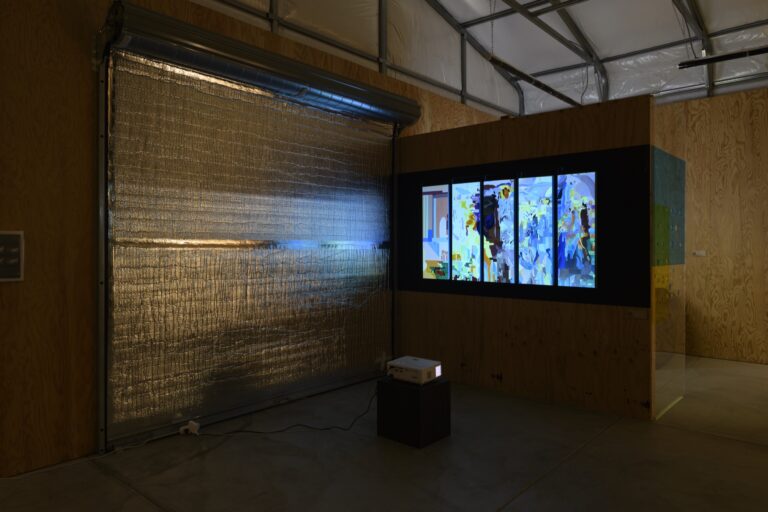
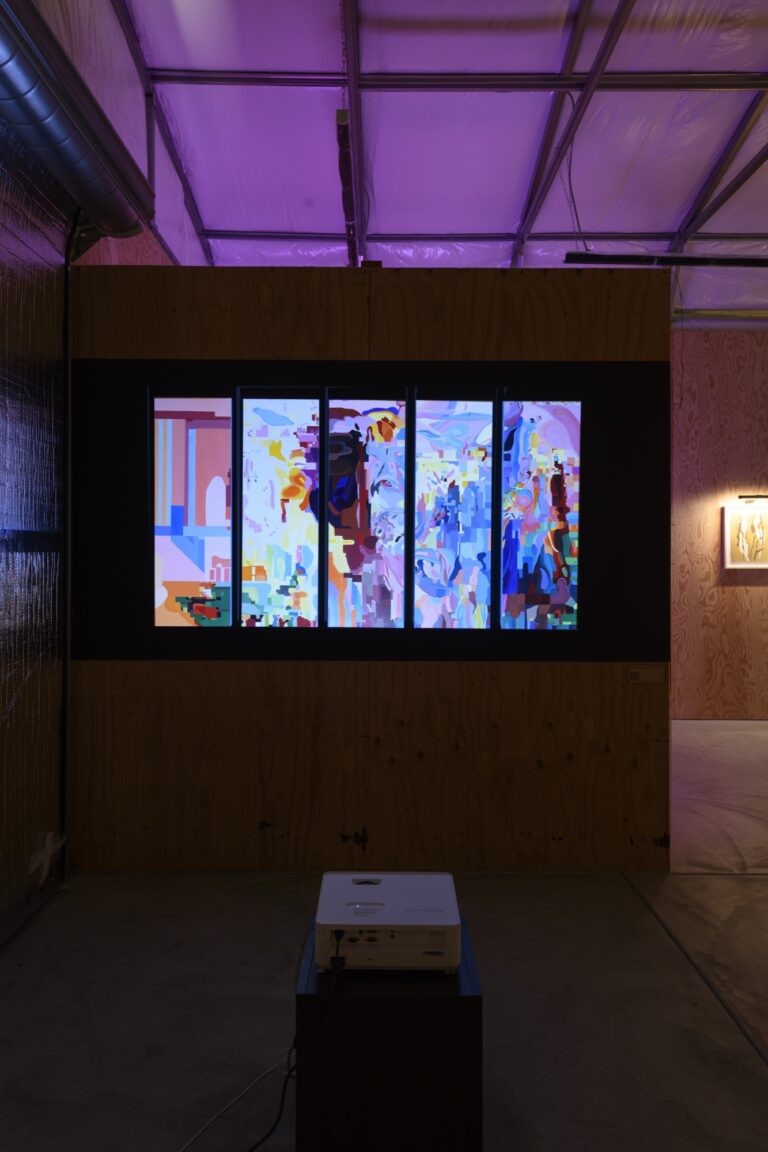
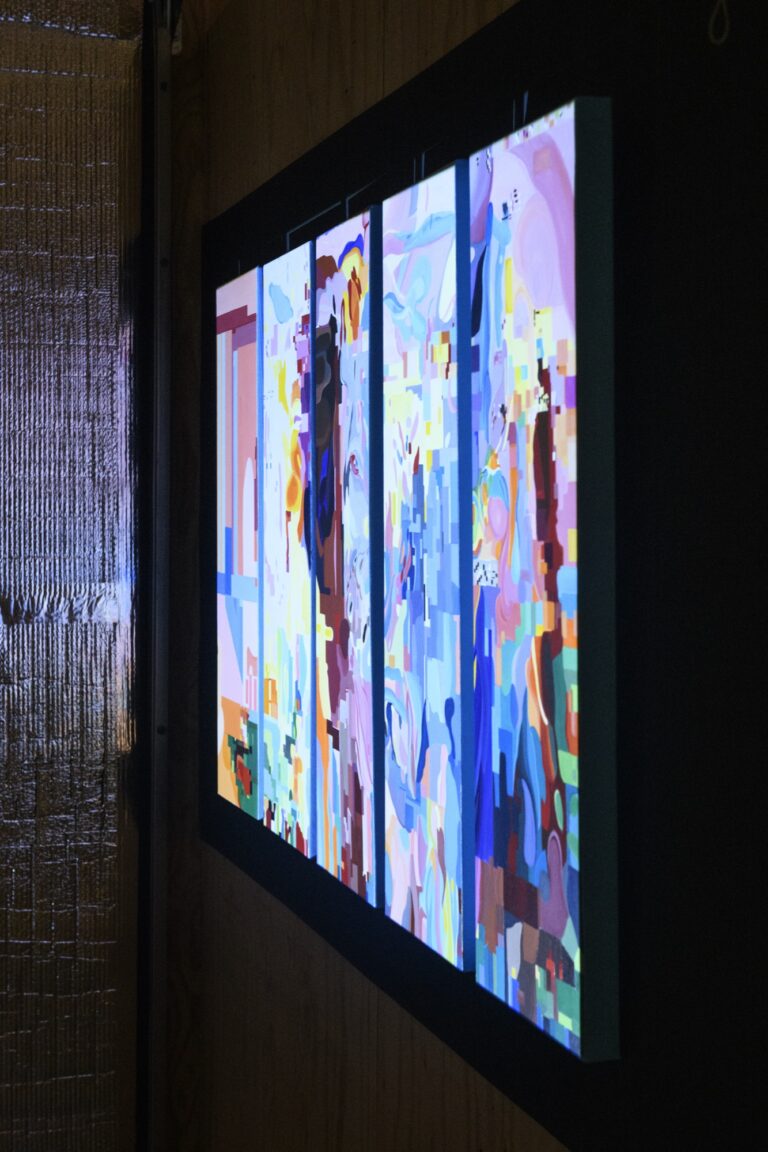
Brett Amory is an interdisciplinary artist working across painting, installation, and algorithm guided imagery. His practice centers on z0glyphic 913, a recursive speculative language. This language acts as an engine, tracing the evolution of information online by reprocessing its own outputs. It embraces ambiguity as a catalyst for invention, reflecting remix culture and theories that automated agents sustain much of the web.
His work has been exhibited both nationally and internationally, including at the National Portrait Gallery, London; the Scottish National Portrait Gallery, Edinburgh; the Fort Wayne Museum of Art, Indiana; Contemporary Jewish Museum, San Francisco; and de Young Museum, San Francisco.
Brett Amory received a Master of Fine Arts from Stanford University and a Bachelor of Fine Arts from the Academy of Arts University. He currently lives and works in Oakland, California. He is also a recipient of the Pollock-Krasner Foundation Award.
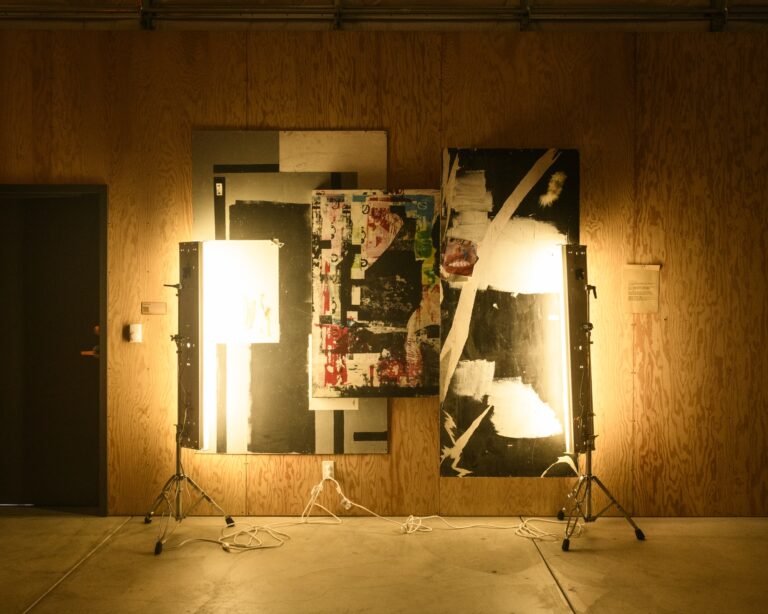
Camille Utterback
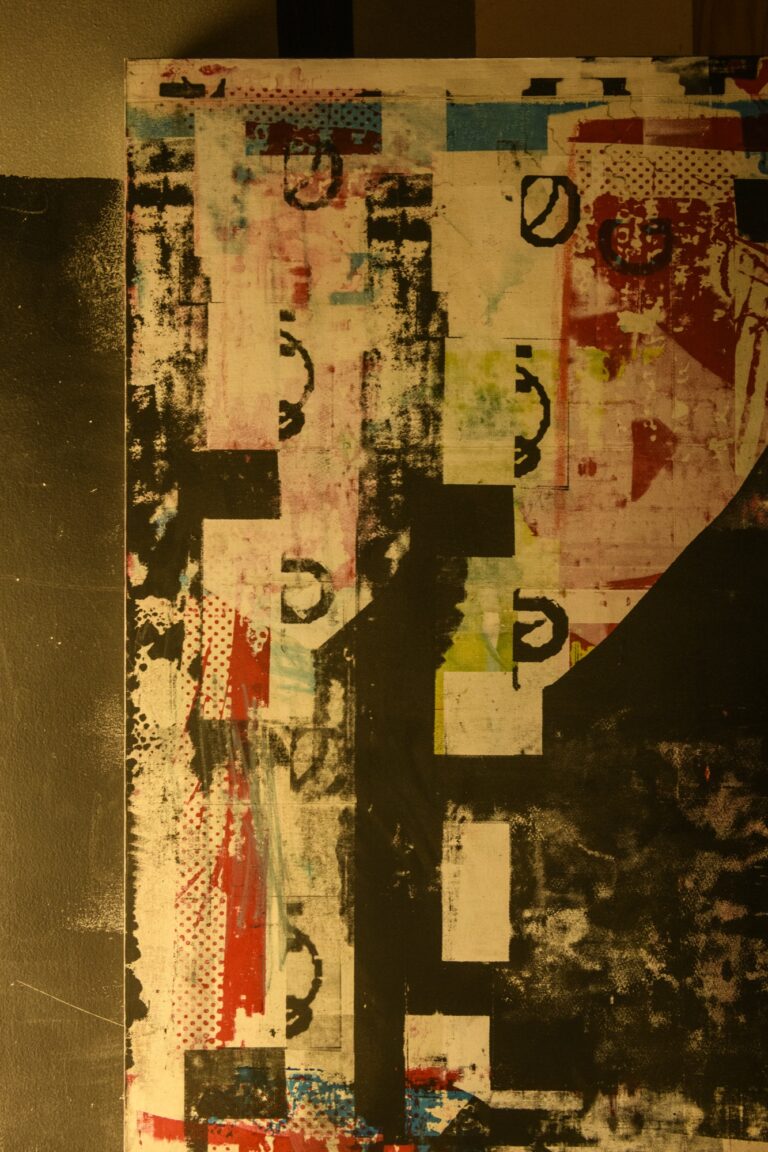
untitled monotypes
This series of four untitled monotypes depicts cracks in a sidewalk filtered through both digital and analog processes. My goal with these experiments is to embrace computational tools, while undermining the fantasy of digital images and information that are endlessly and perfectly reproducible, will never decay, fail, or be entangled with the world outside themselves. As I generate these prints, algorithmic simplifications and "errors" are introduced, and temporal and physical processes (and my lack of expertise as a printmaker!) impinge upon a perfect reproduction. My hope is that these images evoke a kind of humility and presence contrary to the hermeneutic slickness that is the default result of digital processes fundamentally designed to suppress "noise."
The iterative steps I use to create each print are: photograph failure points in a concrete sidewalk; run the image pixels through an edge-detection algorithm to simplify the edges of the cracks into a series of x,y points (vector lines); trace these lines with a laser cutter, burning paper to create a positive and negative stencil; place the stencils on inked acrylic plates and run these in multiple passes through a traditional etching press — improvising the colors and placement of the stencils with each layer; include "ghost" prints as some layers; re-run the edge-detection algorithm at different resolutions to create more simplified or "degraded" outlines; continue to thin my ink until it "falls apart," leaving blotchy, imperfect areas of color that remind me of the deteriorating concrete.
Camille Utterback is a pioneer in the field of digital and interactive art. Her work ranges from interactive gallery installations, to intimate reactive sculptures, to architectural scale site-specific works. Historically, Camille's work has explored the aesthetic and experiential possibilities of linking computational systems to human movement and physicality in visually layered ways. In addition to a newfound love of printmaking, her recent projects combine computer generated animations with custom glass panels or hand formed glass to explore the potential for display surfaces that address the subtleties and sensuality of our depth perception.
Camille's many awards include a MacArthur Foundation Fellowship (2009) and a US Patent (2001). Her extensive exhibit history includes more than fifty shows on four continents; highlights include the Smithsonian American Art Museum, and the National Portrait Gallery in Washington, DC; the Whitney Museum of American Art, New York, NY, and a solo show at the Amon Carter Museum of American Art (2019). Camille is an associate professor of art in the Department of Art & Art History, and by courtesy, of Computer Science, at Stanford University. Her work is represented by Haines Gallery in San Francisco.
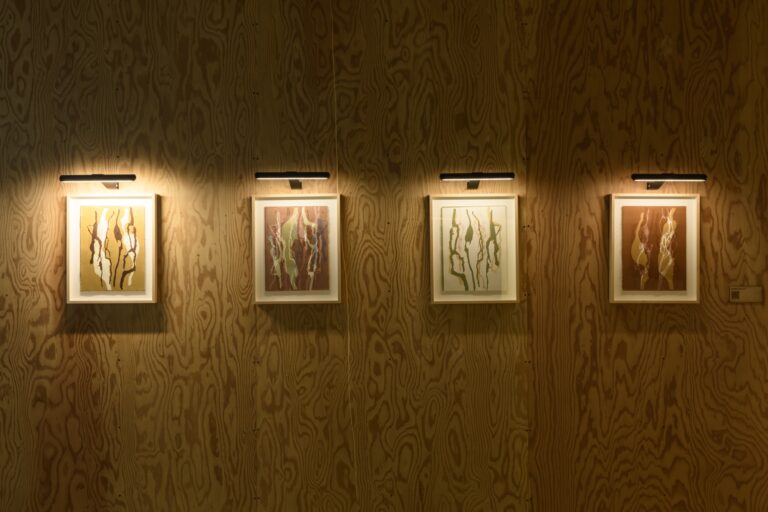
Carlo Nasisse
Uncanny Earth
An AI tells a story about the earth to a human audience. Written with ChatGPT, and using the logical and categorizing framework of AI systems, the film investigates the discourse around the non-human world via the vast data bank of the AI.
Uncanny Earth explores questions around non-human agency, extractive histories, and storytelling about the earth in order to paint a portrait of the strange and inconsistent relationships, stories, and ideas we have about the earth we live on. This is set against the AI itself, which poses so many questions around sentience, being, and autonomy. Uncanny Earth transposes this discourse to the non-human world.
Carlo Nasisse is a director and cinematographer whose work explores ecology and the relationships between humans, landscapes, and politics. His films have been supported and exhibited by The New Yorker, POV Shorts, PBS, and have screened at major festivals including SXSW, True/False, Camden International, Oberhausen, SFFILM, and Slamdance. Carlo holds an MFA in Documentary Film and Video from Stanford University.
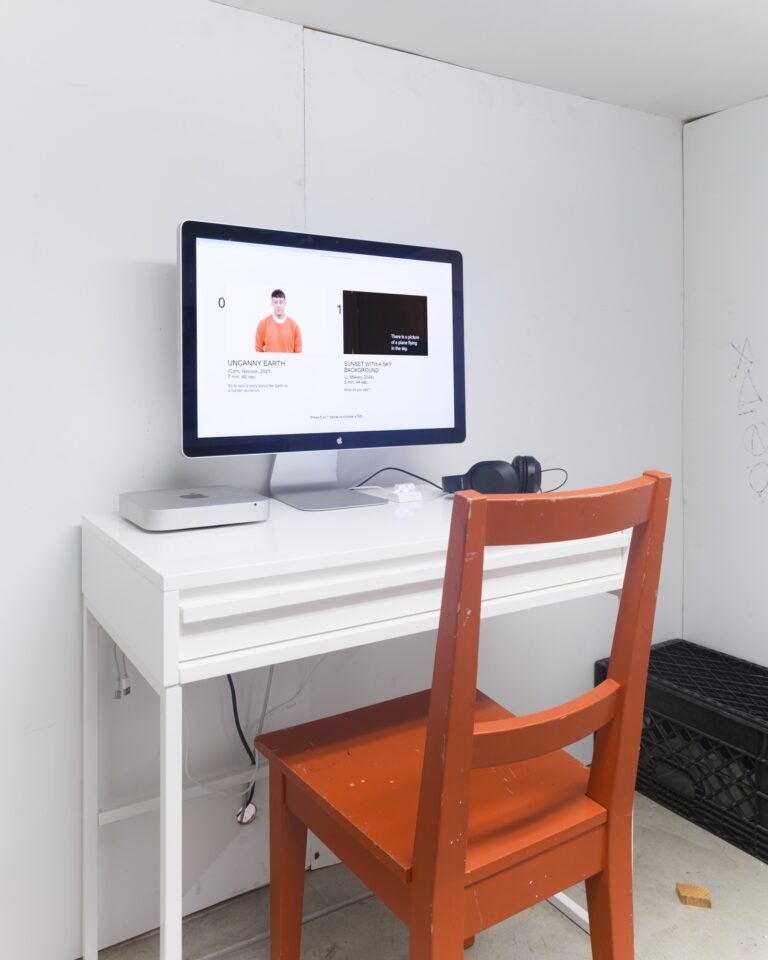
DJ Meisner
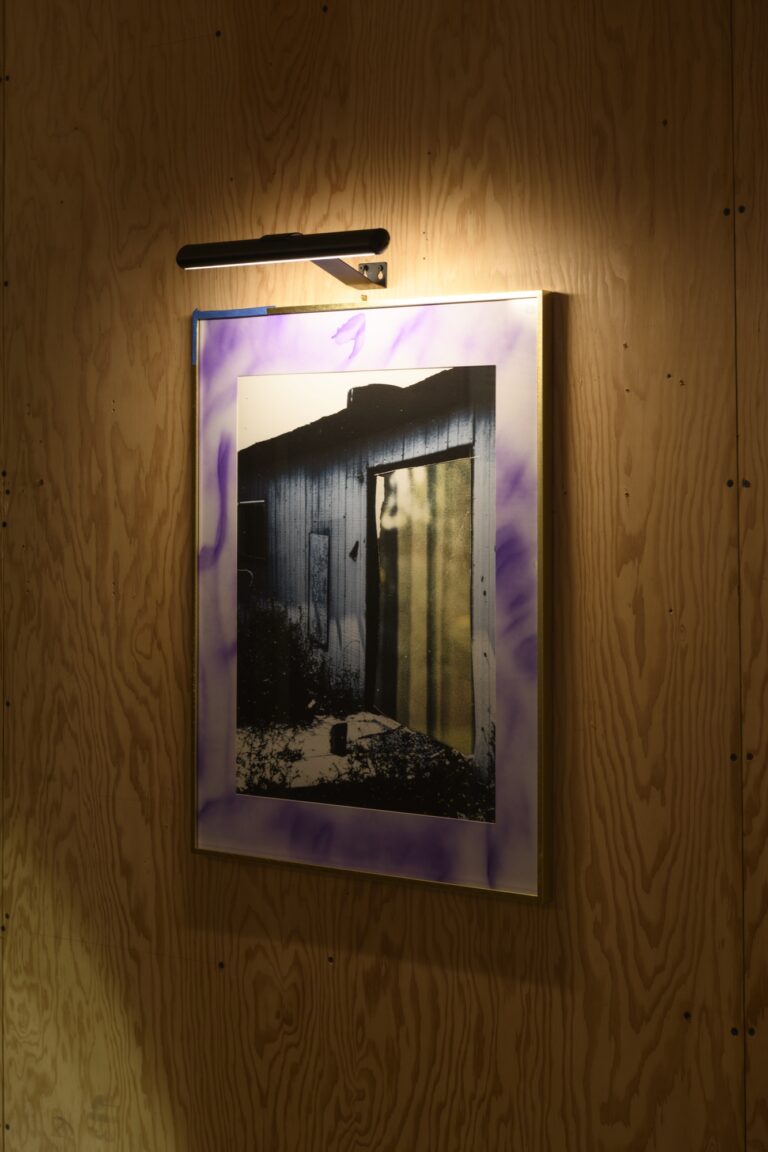
Untitled (pkd Vision over Inverness, 666th Radar Squadron, “18:30 swallow capsules, after effect protect metals wait for mask signal”)
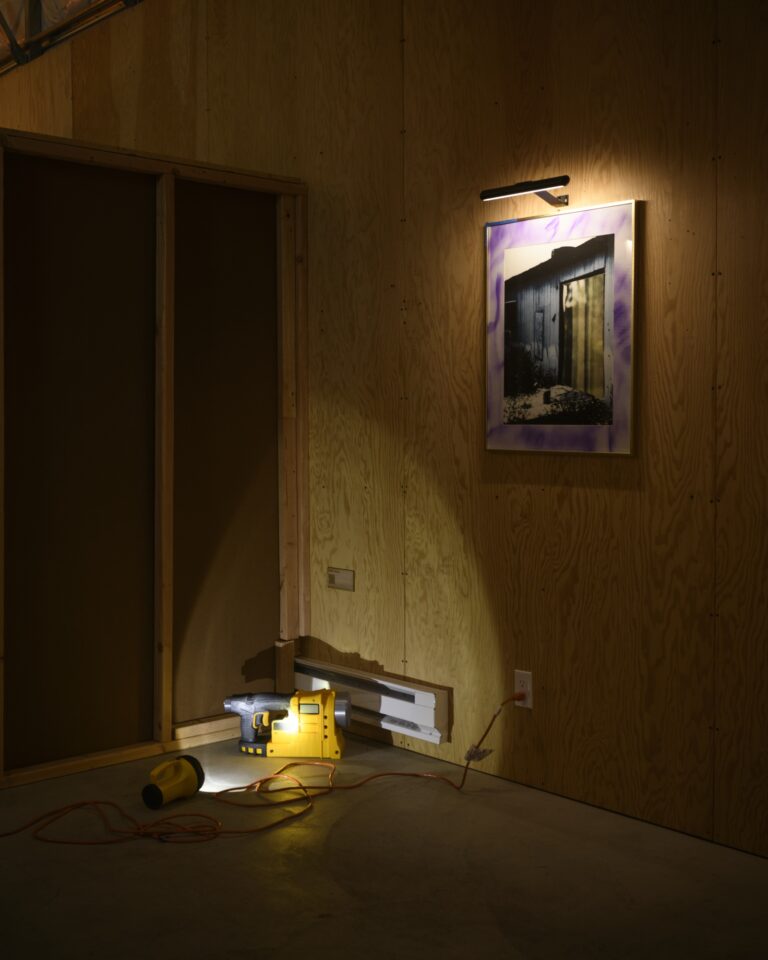
Three Overlapping Circles: 1. In 1963, Philip K. Dick went for a walk in his neighborhood of Inverness, CA. Above him, over Inverness Ridge and Mt. Vision, he saw a large metal mask in the sky, slits for eyes, cruel vast visage. The sighting haunted him for months.
2. In 1980, The 666th Radar Squadron based on Mt. Tamalpais was deactivated, and the following year the base was transferred over to the FAA. What’s left of the deconstructed half are concrete foundations and military-grade compressed fiberboard insulation panels.
3. In 1966, two Brazilian electronic technicians were found dead on Vintém Hill with lead metal masks over their eyes. A small notebook was found among them. Written on one of the pages in Portuguese: “18:30 swallow capsules, after effect protect metals wait for mask signal.”
DJ Meisner is an artist making mixed media work about conspiracy theories, spiritual experiences, and being online. He works in the mediums of photography, painting, drawing, and sculpture. DJ is also a frequent contributor to, and active member of, the publishing platform Do Not Research.
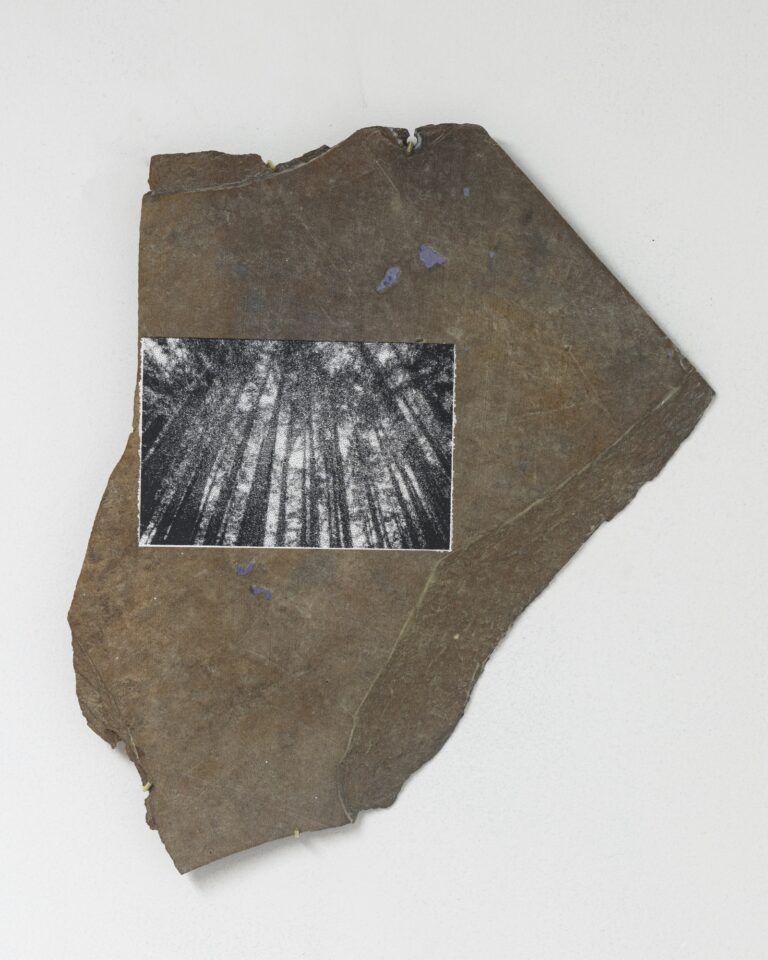
Ebti
Déja vu, collapsed
My practice is informed by translation, languages, theater, literature, music and my family's making-traditions I never got to learn. Through this multifaceted, dislocated lens I look at the idea of home, belonging, and attachment. Though my work is rooted in photography, I am constantly looking for new materials and methods that will best translate my ideas. Once I start working on a project, I embrace notions of accident and failure. My practice is ever-evolving and is influenced by my restlessness.
Ebti is a multidisciplinary artist, a photographer and a translator living between Cairo and San Francisco. She has an MA in translation and intercultural studies from Johannes Gutenberg Universität, Mainz, and an MFA in Fine Art from California College of the Arts. Ebti is part of "Right window" collective, "Off Hours" collective and is sitting on the curatorial council at "Southern Exposure Gallery" in San Francisco. Her work was shown in galleries around the US and Egypt. She currently teaches visual arts and photography at Performing Arts Workshop in San Francisco, Bay Area.
Jon Bernson
Ideal Solutions by The Naturalists Group
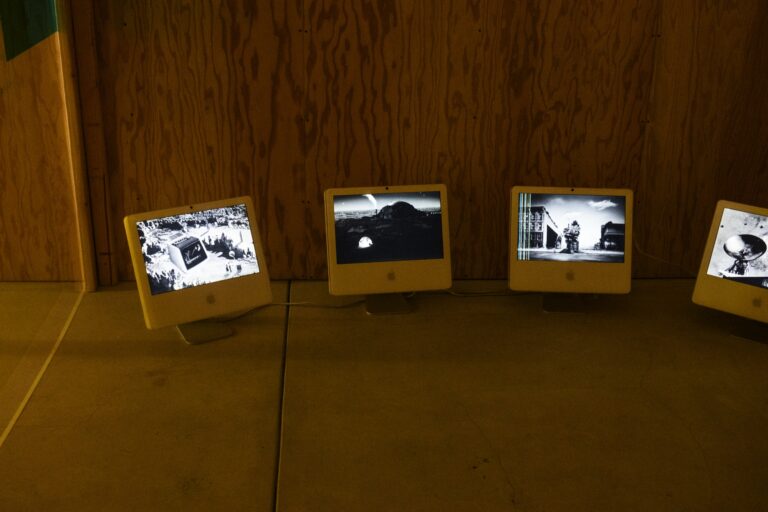
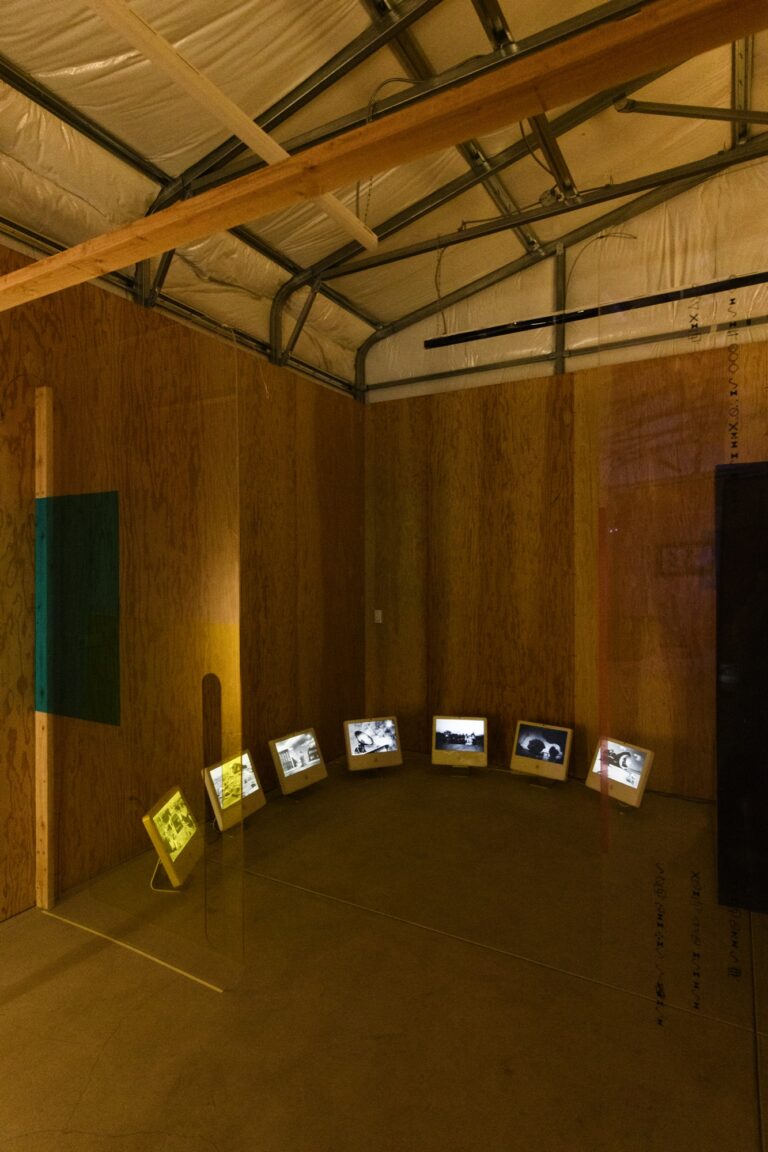
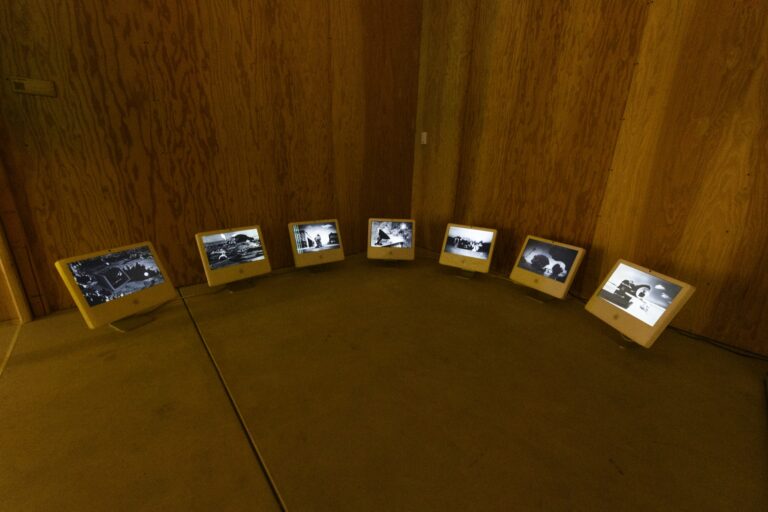
Ideal Solutions is an asynchronous, multi-channel video installation inspired by The Naturalists Group, an independent scientific collective pursuing research beyond the confines of institutional oversight. Working from a self-contained laboratory on an atoll in international waters, the Naturalists are dedicated to inquiry untethered from a political climate that has become hostile to science, truth, and long-term thinking. The project features seven proposed inventions that respond to imminent planetary challenges.
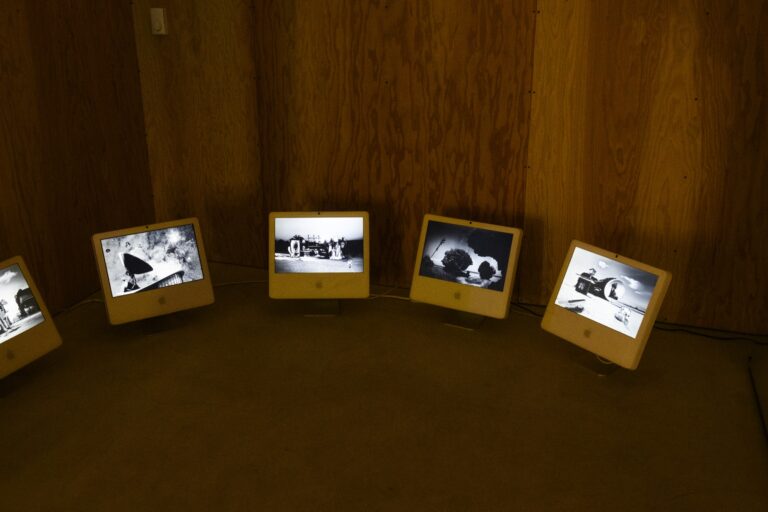
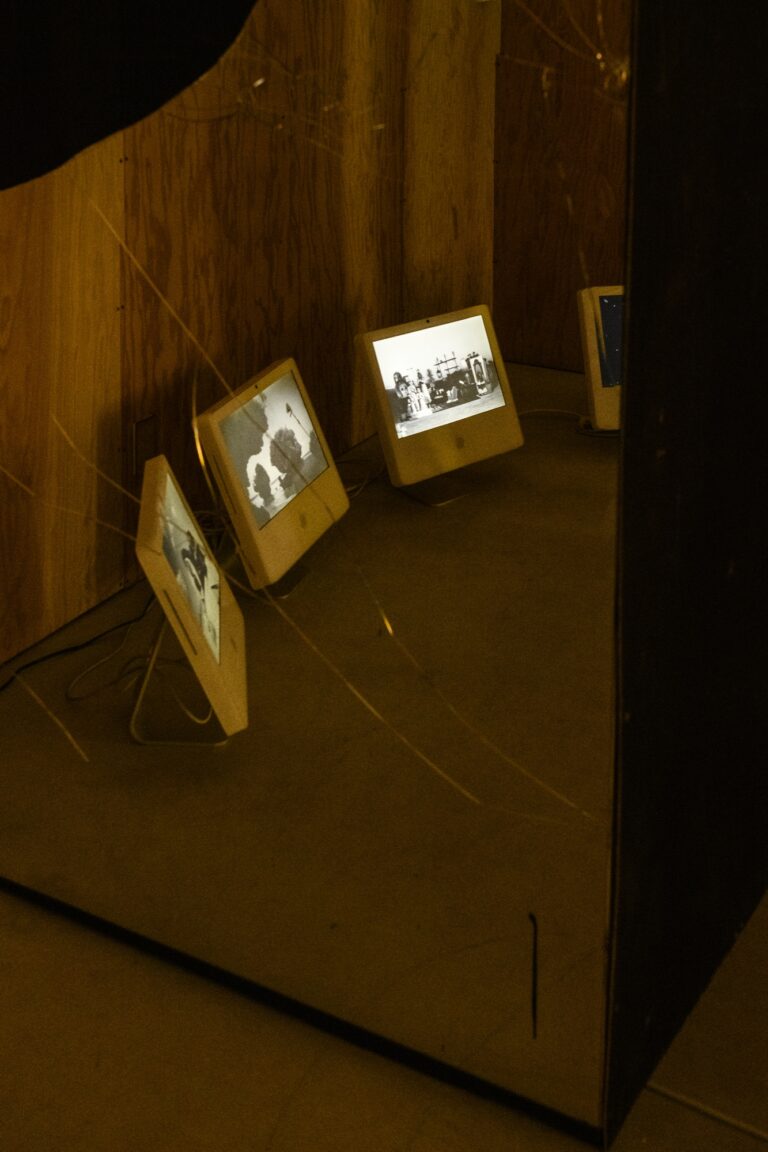
As the artist, I function not as the originator, but as a translator of the Naturalists' ideas, rendering research into visual and sonic form. Each of the seven video works began as a hand-cut paper collage, representing a distinct solution-oriented invention. These collages were then animated through a combination of AI-prompted motion and traditional film editing techniques, resulting in an analog-meets-algorithmic sensibility. Black and white video displayed on vintage iMacs highlights the glacial timelines often required for change and reflects my hope that the solutions to our world's problems remain within reach.
Jon Bernson is an Emmy and Peabody Award-winning media artist whose interdisciplinary practice blends film, music, installation, and theater. His work incorporates layered world-building to explore existential themes with a slow-burn, tragicomic style. This approach has been supported through artist residencies at the de Young Museum, Playwrights Foundation, The Space Program, and The Imaginists.
Recent work includes Third Eye Moonwalk, which has been exhibited in various forms at Minnesota Street Project, Catharine Clark Gallery, Stanford University, Custom Made Theater, and The Growlery. Other installations include Sound Affects, a multimedia collaboration at Sonos Studio in Los Angeles, and Beautification Machine, a sound sculpture created with Andy Diaz Hope, acquired by the Nevada Museum of Art for its permanent collection. Ideal Solutions is Bernson's latest addition to The Naturalists, an ongoing project that he is developing into an interactive performance with The Imaginists.
Joshua Moreno
In His Own Image
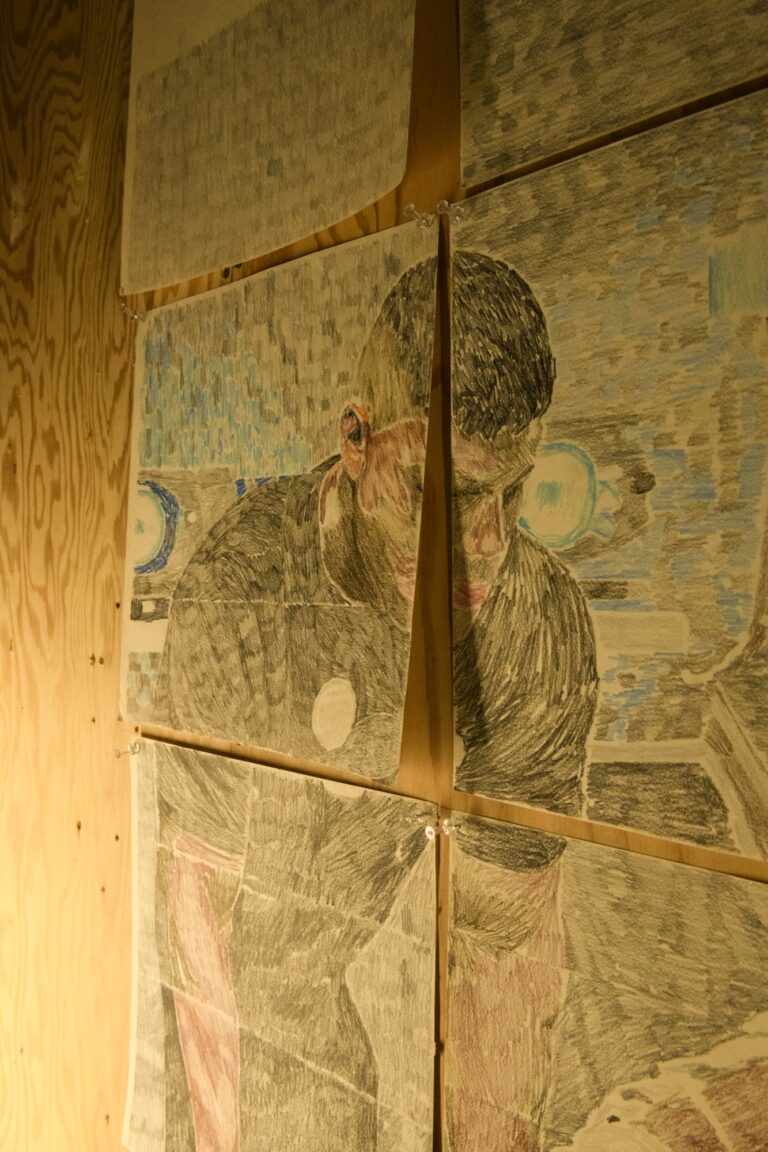
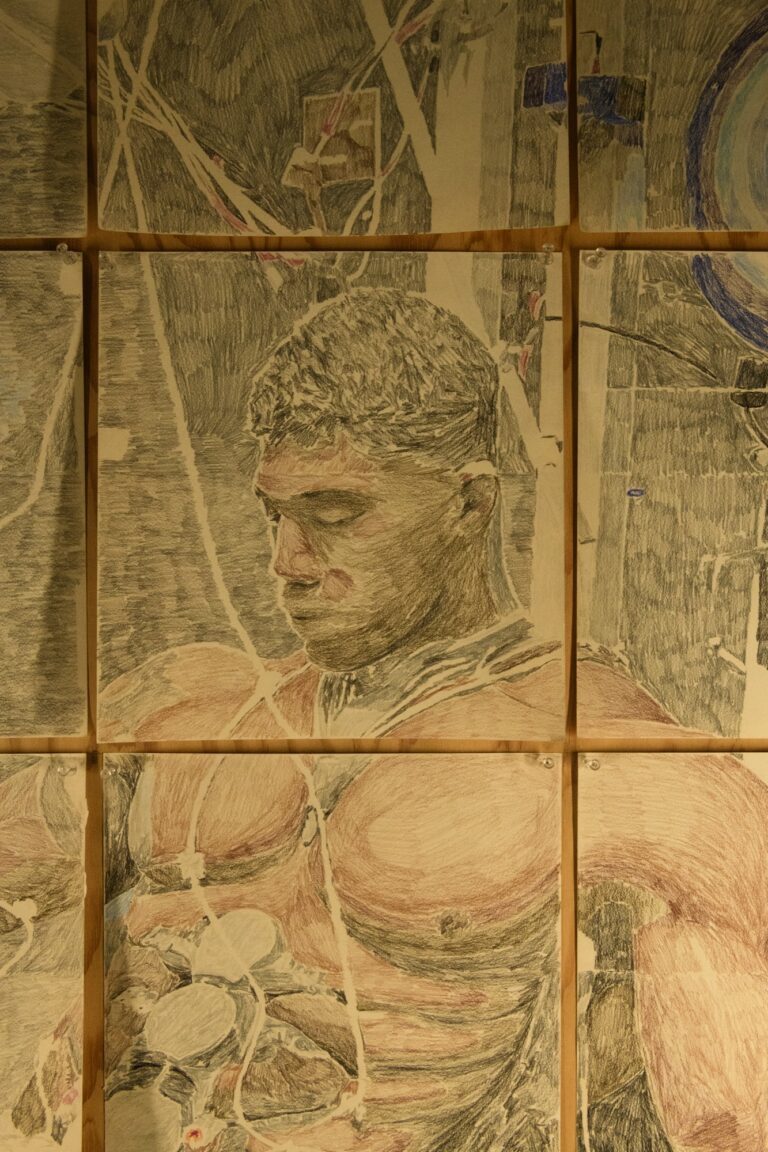
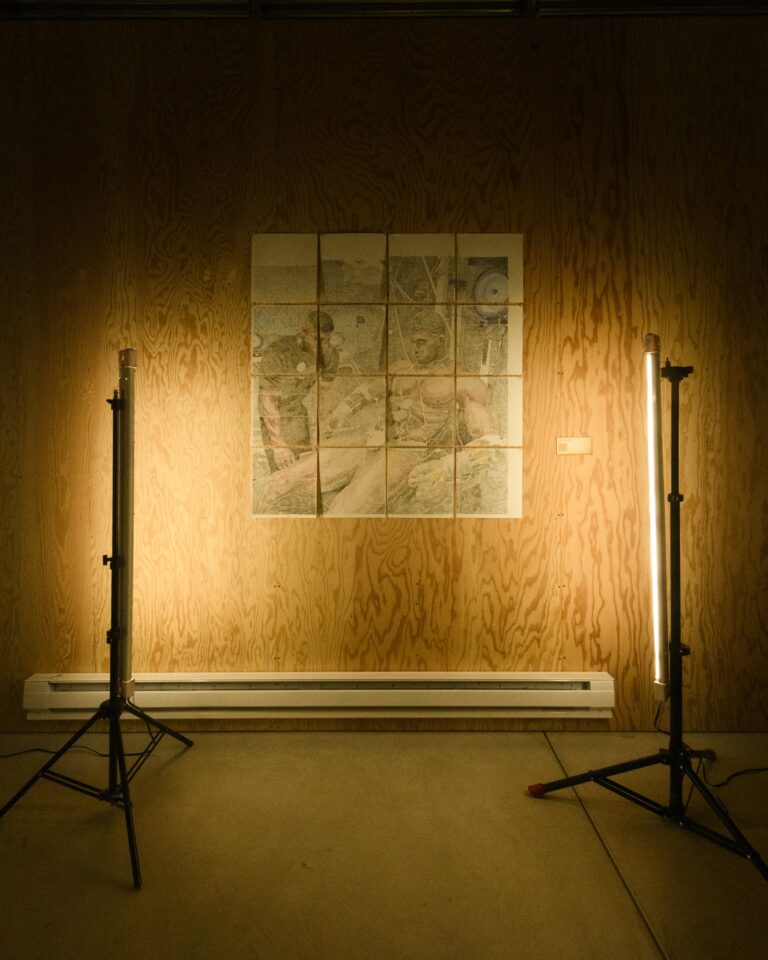
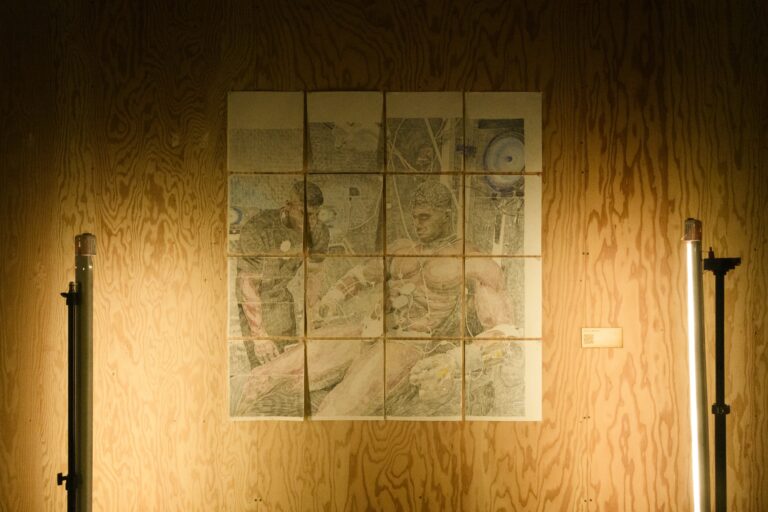
I hand-drew an AI-generated image of AGI (Artificial General Intelligence) reproducing itself in human form to reintroduce the human hand into a machine-made vision. This translation from digital to physical became a way to explore authorship and reflect on the implications of self-replicating AGI — a major leap that blurs the line between tool and lifeform. I wonder what it means for AI to inherit, mimic, or truly understand humanity, and consider our evolving role as creators and perhaps as ancestors.
Joshua Moreno was born and raised in Watsonville, California. In 2011, he graduated from the University of California San Diego with a BFA in art practice, and in 2022 from Stanford University with an MFA in studio art. Since 2012, he has been working in art education, teaching courses in art history, filmmaking, and art. Presently, he is teaching art courses at Stanford and San Jose State University.
In his work, he examines the overlapping relationship between the natural and human-made environment and highlights patterns and systems of efficiency that exist within them. Through installation, drawing, and film, he re-evaluates the everyday spaces and objects that surround us, with added attention to elemental phenomena.
Karin + Shane Denson
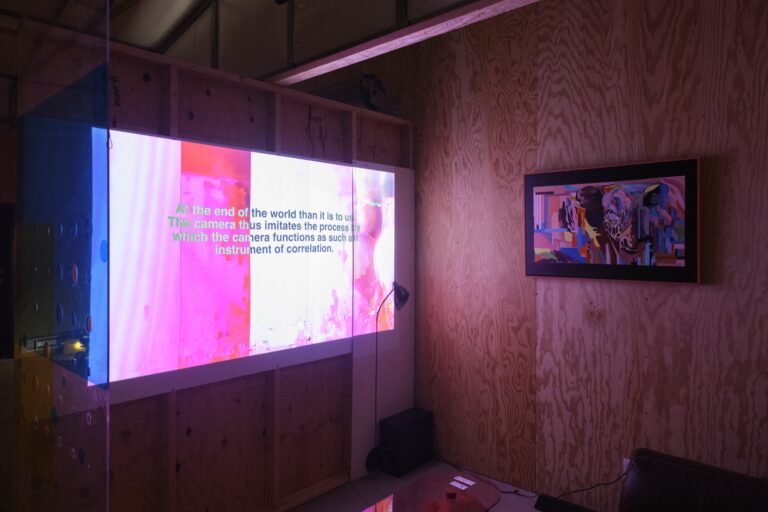
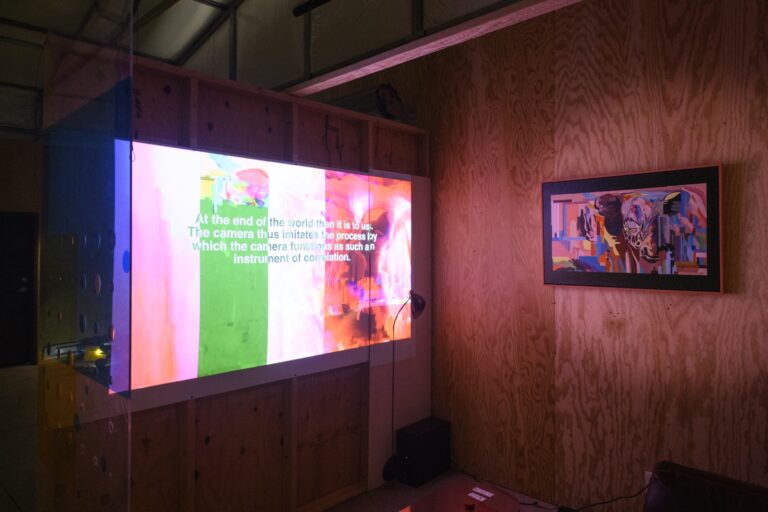
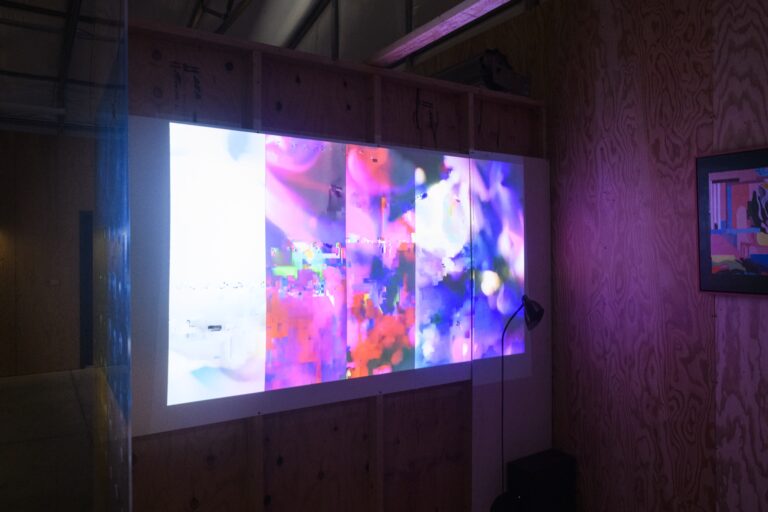
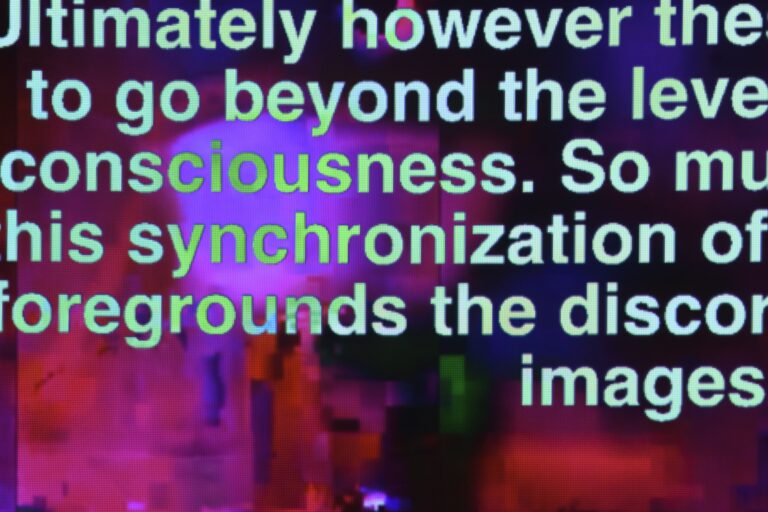
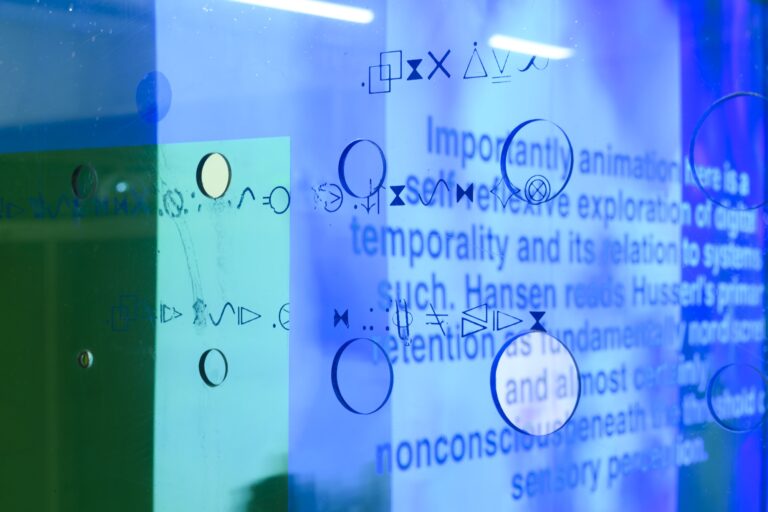
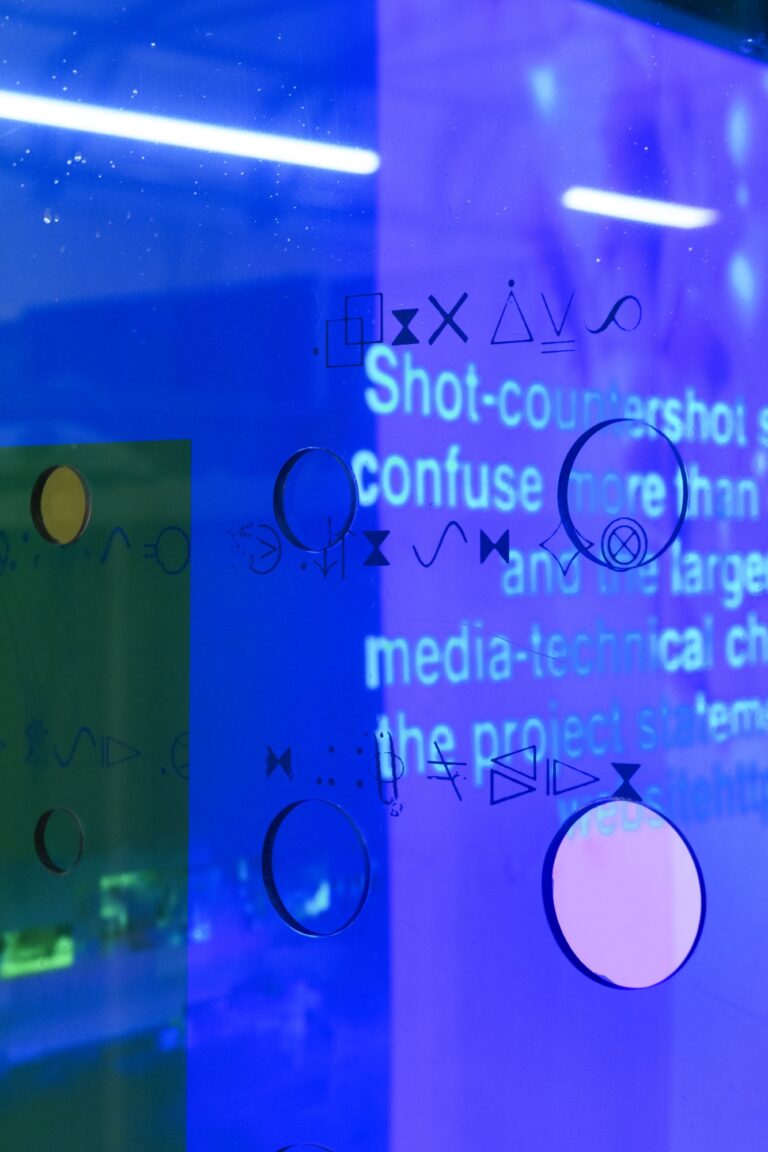
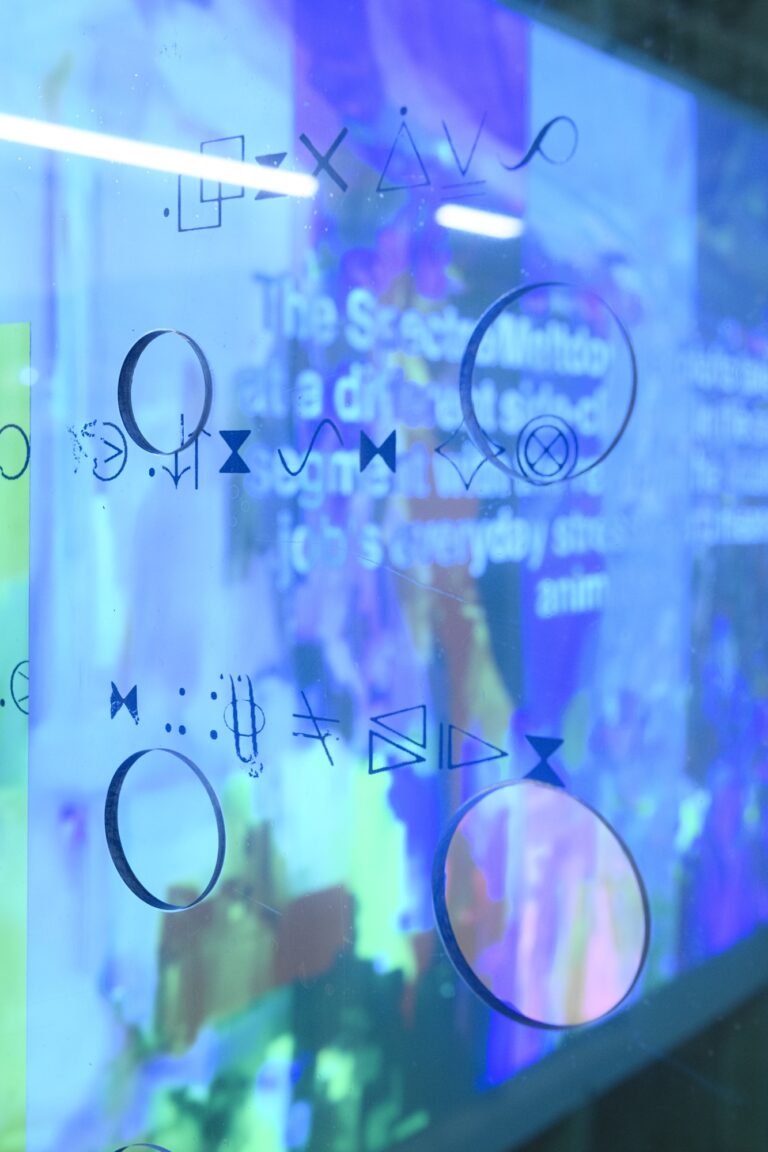
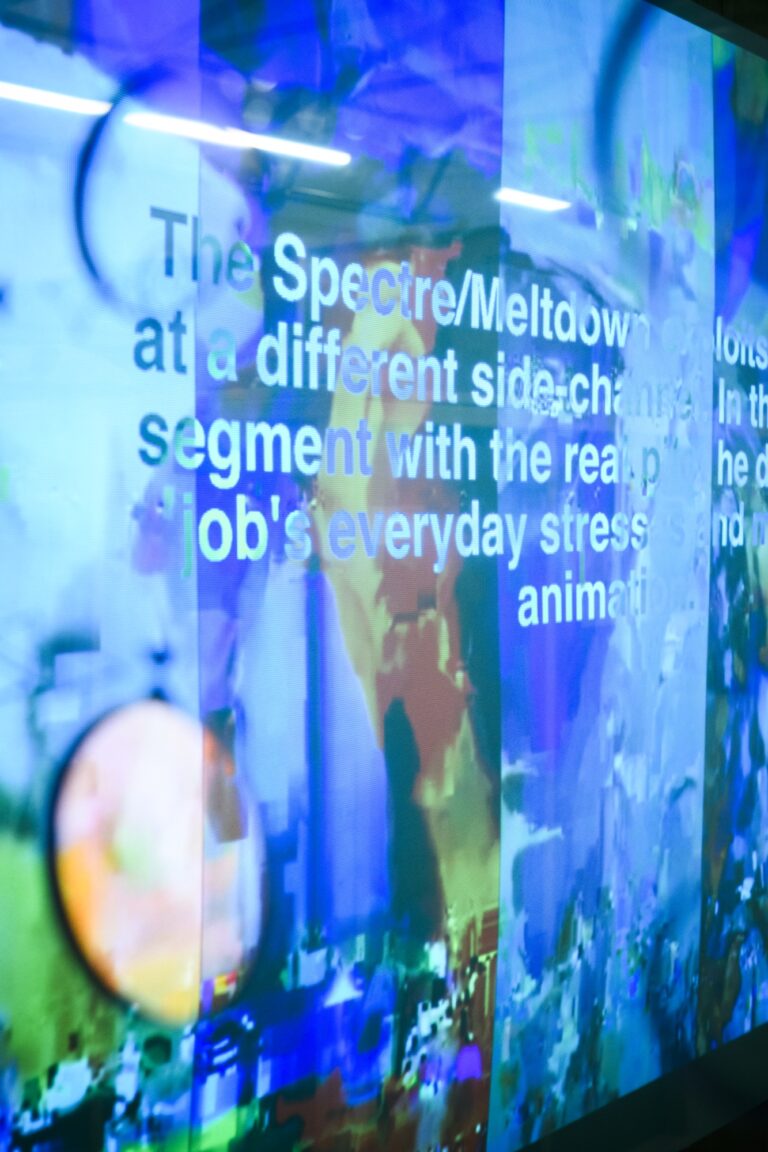
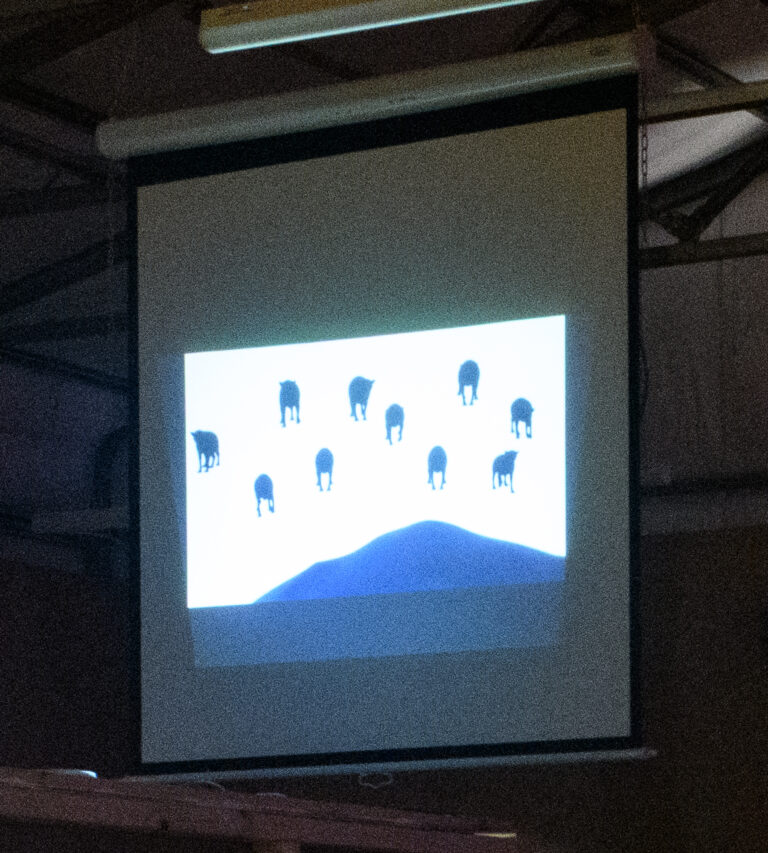
GlitchesAreLikeWildAnimalsInLatentSpace! — BOVINE
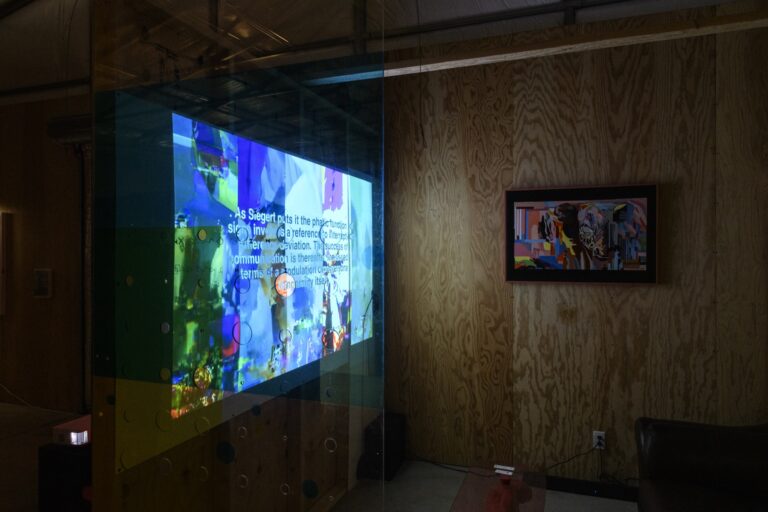
Inspired in equal parts by glitch-art vernaculars, the chronophotography of Eadweard Muybridge and Étienne-Jules Marey, the cut-up methods of Brion Gysin and William Burroughs, and generative practices from Oulipo to Brian Eno and beyond, our ongoing series GlitchesAreLikeWildAnimalsInLatentSpace! stages an encounter between human imagination and automated image-making.
We begin by training AI models on a set of Karin's glitch paintings, which are produced by subjecting wildlife videos (all shot by Karin) to aleatoric "databending" processes. The digital videos break and reveal their underlying protocols and infrastructures in the form of glitches and compression artifacts. Selected images are then painted by hand with acrylic on canvas. Fed back into the machine, deep learning models are prompted to generate new images in the style of Karin's glitch paintings. But since contemporary ("diffusion"-based) AI models are effectively trained to eliminate "noise" and glitches, we are pushing them against their intended purpose—and the results are accordingly unpredictable.
Having obtained a new image, Karin translates it back onto canvas. In this case, we are working with a cow that the AI surprisingly, and humorously, generated in response to the prompt "glitches are like wild animals." Shane then takes an image of the new painting as the basis for an AI-generated video. Produced in short bursts of animation and strung together, the video is then subjected to the original glitch processes that are responsible for its training data.
Through this recursive and collaborative process, which shuttles repeatedly between the digital and the physical, the invisible and the perceptible, we hope to open for viewers a space of glitchy imagination, if not insight, into the opaque black-boxed operations of the algorithmic media that are rapidly reshaping our visual cultures and environments.
Karin Denson is a Bay Area artist working with paint, photography, video, and collage. Shane Denson teaches media theory and aesthetics at Stanford's Department of Art & Art History. In our collaborative work, we travel back and forth between theory and practice, implementing generative and aleatoric principles across the media of pigment and pixel, canvas and concept, machinic and manual production.
Shane Denson is Professor of Film and Media Studies and, by Courtesy, of German Studies and of Communication at Stanford University, where he also serves as Director of the PhD Program in Modern Thought & Literature. His research interests span a variety of media and historical periods, including phenomenological and media-philosophical approaches to media arts, film, digital media, and serialized popular forms. He is the author of four books, including Discorrelated Images (Duke University Press, 2020) and Post-Cinematic Bodies (meson press, 2023).
Karin Denson
Glitch paintings
In my paintings, collages, and photography, I explore the fragile intersections of nature and technology. Drawing inspiration from digital glitches and broken ecosystems, my work engages with visual metaphors for the disruptions and imbalances shaping our world today. Glitch aesthetics—those accidental or aleatoric artifacts of malfunction—become a lens through which to examine ecological collapse, transformation, and the possibility of renewal.
My work emerges from a deep love of the natural world and a sustained curiosity about digital processes, especially their wild, unpredictable outcomes. Through abstract forms and layered imagery, I aim to express concern for endangered environments while also revealing their unexpected beauty and resilience. Some species, like the California Brown Pelican, have been pushed to the brink of extinction more than once, only to return through ecotechnical interventions. Others are adapting in real time, expanding into human-altered habitats and reconfiguring old boundaries.
I hope to make these entanglements—between species, systems, and technologies—visible in the fleeting, fragile passage of time. My work asks viewers to sit with malfunction, not as error, but as a mode of attention to the interdependence and precarity that characterize life in the Anthropocene.
Karin Denson is a Bay Area artist working with paint, photography, video, and collage.
Kristen Wong
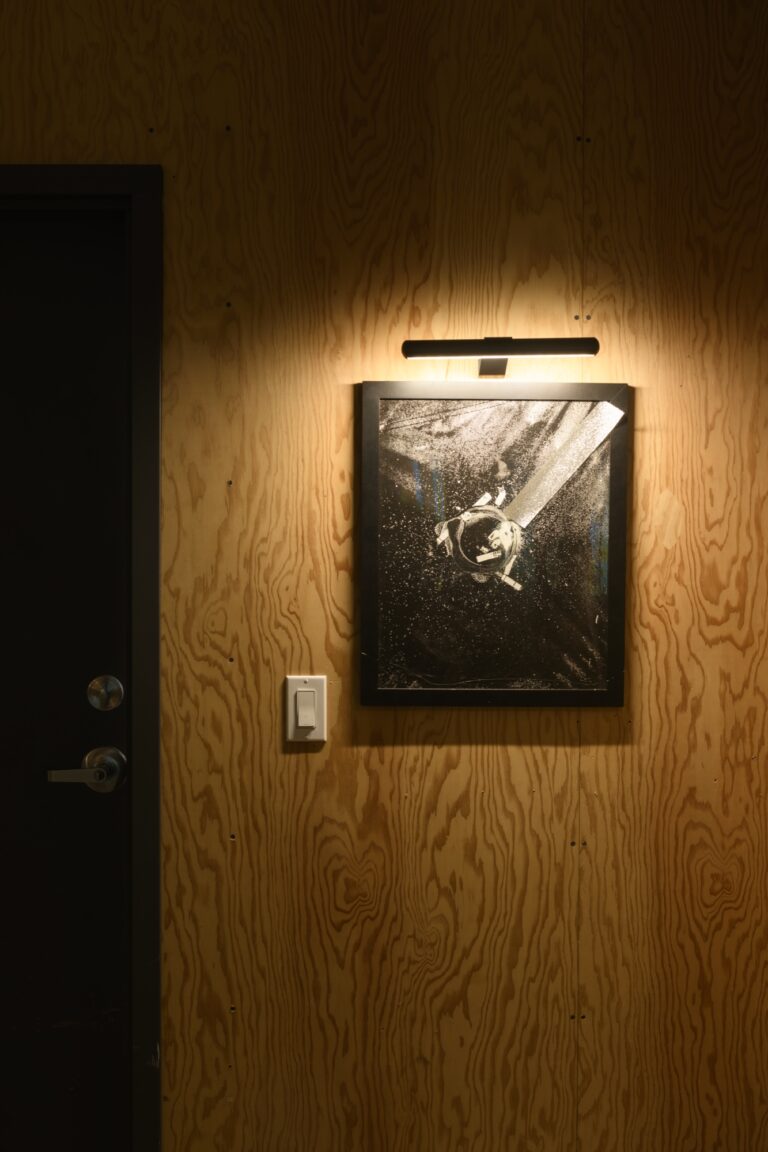
american cheating!!! (phantoms past I–IV)
The title "american cheating" is a reference to the media phenomenon of how cheating within relationships is okay if you marry the person you cheat on your former spouse / partner with. Within the establishment of marriage as a societal pillar you kind of can't talk shit about someone's spouse. It looks bad, gauche. In some ways my work and these images take stolen romanticisms — places — things I wanted outside of myself and what I committed to — and are reframed as solely mine — kind of a manifestation visually that things will work out if I make a vow to them.
Cigarette lake, office trad wife, leaving for someone or something else, glitter night out on the floor. If I say I did it — or admit to cheating myself by letting it leave my mouth or my house or my brain — can we swallow it? Can I bring my skeleton out of the house? I can live with it if I own it. This is my proof it did happen!
Kristen Wong (b.1994) is a visual artist, photographer, and writer living and working in San Francisco. She has studied at Parsons School of Design, holds a BFA in Painting from California College of the Arts, and has an MFA from San Francisco State University, where she won the Graduate Award for Distinguished Achievement. She has shown locally in the Bay Area, nationally in New York, internationally in Europe, and has completed residencies at Headlands Center for the Arts in Marin and Frans Masereel Centrum in Kasterlee, Belgium. She is currently a studio resident at Minnesota St. Project in San Francisco's Dogpatch district.
Her practice largely consists of photographic collage composed of mixed media images of minutiae that becomes monumental. She uses destructive and additive marking, hand rendering, and digital and analog manipulation techniques, and incorporates collage elements into altering 35mm/medium format film and iPhone photographs to question the validity of what parts of what functions as visual truth are "real" across sentimentality, place, and memory.
Mark Amerika, Will Luers, & Chad Mossholder
Posthuman Cinema
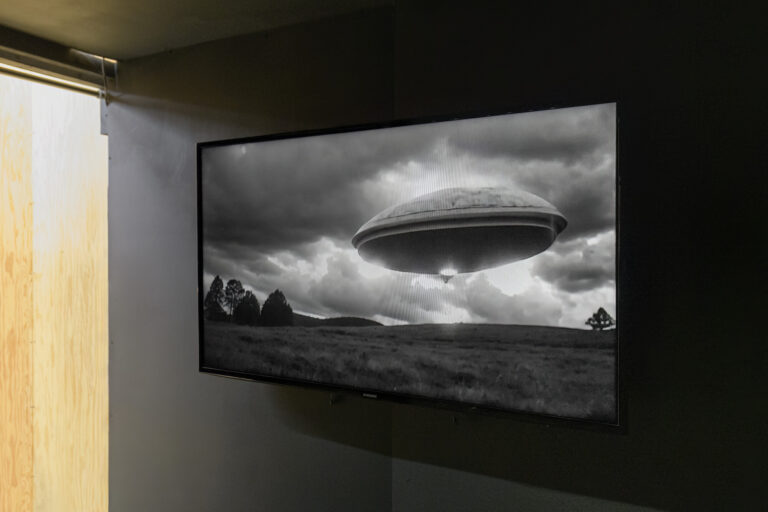
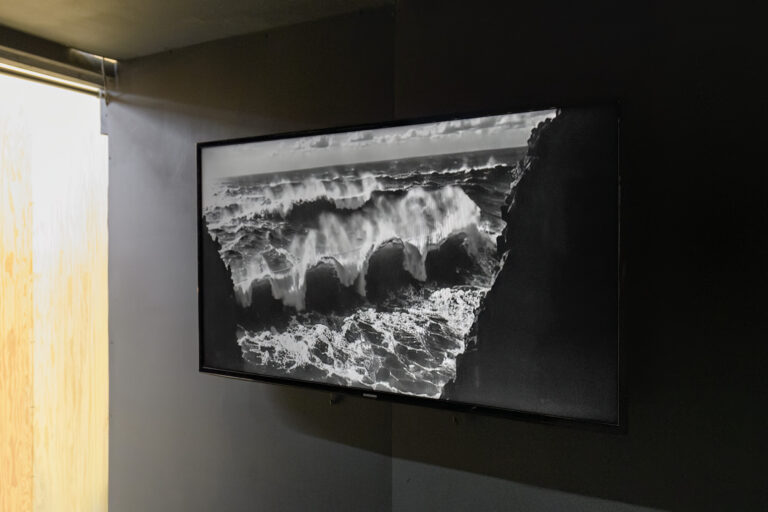
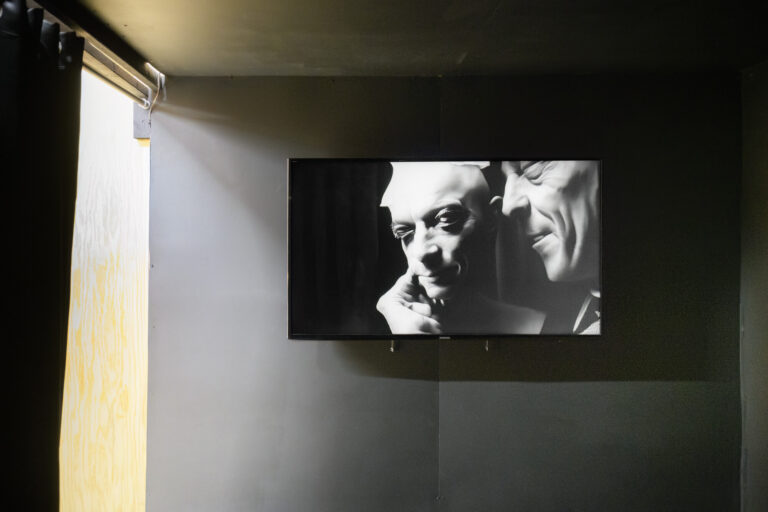
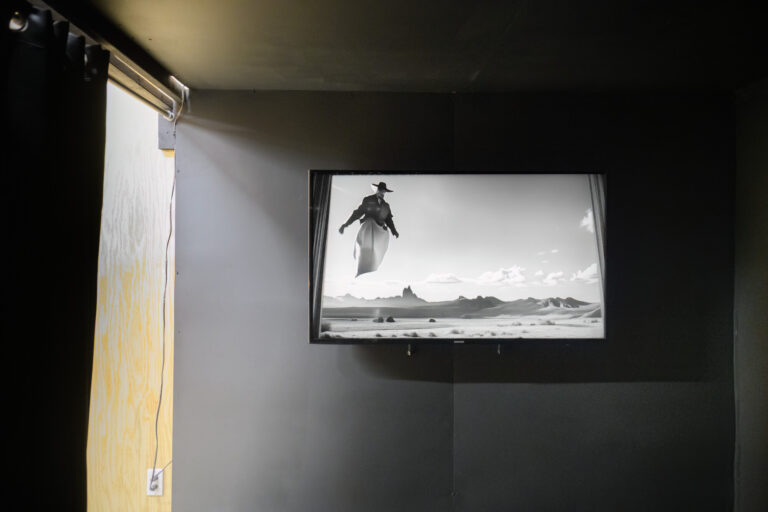
The PHC artist collective (Mark Amerika, Will Luers, and Chad Mossholder), in human-AI symbiosis, created Posthuman Cinema, a collection of ten cinépoèmes that playfully experiment with AI as a form of otherworldly alien intelligence.
All of the works are intentionally composed as moody black and white films that are reminiscent of the filmmakers that have most influenced the PHC artists including Agnes Varda, Michelangelo Antonioni, Ingmar Bergman, Chantal Ackerman, Maya Deren and Andy Warhol. The imaginary bodies depicted in the AI-generated moving images are haunting, ghostly, uncanny, queer and distorted. These phantom figures are conceptualized as literal ghosts in the machine or what Marcel Duchamp referred to as an apparition of an appearance.
Mark Amerika has exhibited his art in many venues including the Whitney Biennial, the Denver Art Museum, ZKM, the Walker Art Center, and the American Museum of the Moving Image. He is the author of thirteen books including My Life as an Artificial Creative Intelligence, published by Stanford University Press.
Will Luers is a digital artist, writer, and educator specializing in recombinant, computational, and AI cinema arts. His work and collaborations have garnered international recognition and been featured in festivals and conferences such as the Electronic Literature Organization, FILE (Brazil), and ISEA. “novelling,” a generative work made in collaboration with poet Hazel Smith and sound artist Roger Dean, won the 2018 Robert Coover Award for Electronic Literature.
Luers holds an MFA in Film from Columbia University and has taught cinema history, theory and practice for over 20 years. He has maintained a particular research interest in web-based video and has published numerous essays about evolving forms of digital cinema. He was awarded Best Screenplay at the 2005 Nantucket Film Festival, and in 2010, a fellowship at the Vectors-NEH Summer Institute for the development of his database video documentary, “The Father Divine Project.”
Luers teaches web development, digital cinema and multimodal publishing in the Creative Media & Digital Culture program at Washington State University Vancouver. He is the founder of the international online journal, The Digital Review, and will edit its 2024 issue on AI creativity. Luers is also the current Managing Editor at the electronic book review.
Chad Mossholder is a BAFTA-nominated composer and sound artist renowned for his ability to seamlessly bridge the worlds of art and commercial creative endeavors. With a career spanning over two decades, his diverse portfolio encompasses experimental electronic music composition, audio/visual art installations, and the dynamic realm of video game music and sound design.
His critically acclaimed and experimental electronic music project “Twine” has performed all over the world and has released six full length albums as well as numerous mini-albums and EP’s on such labels as Schematic, Hefty Records, Bip-Hop Records and Ghostly Records. His sound designs span a diverse range of high-profile game titles including DOOM, DOOM Eternal, EverQuest, EverQuest II, Star Wars Galaxies and DC Universe Online.
For more than 20 years, Chad has maintained a fruitful collaboration with acclaimed artist and writer, Mark Amerika. Their collaborative works, including Immobilité, the first-ever feature length art film shot on a mobile phone, have graced prestigious exhibitions on a global scale, solidifying their presence within the international art scene.
Miguel Novelo
[HTML [NON-EUCLIDEAN [VESSEL]]]
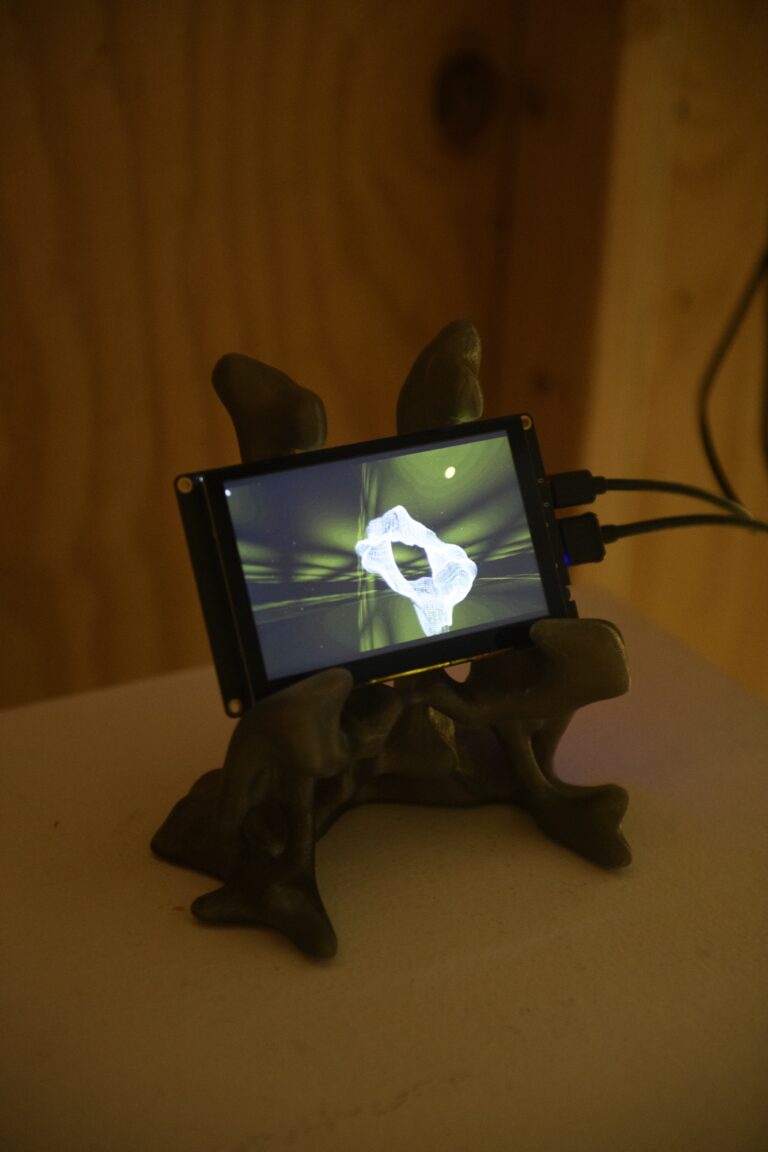
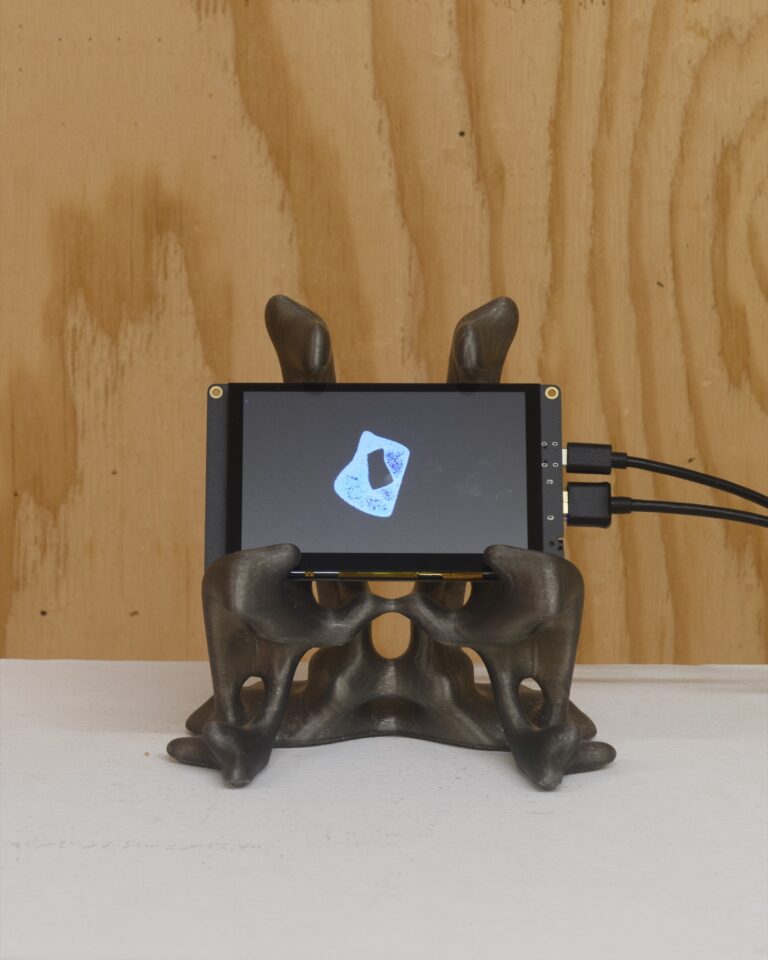
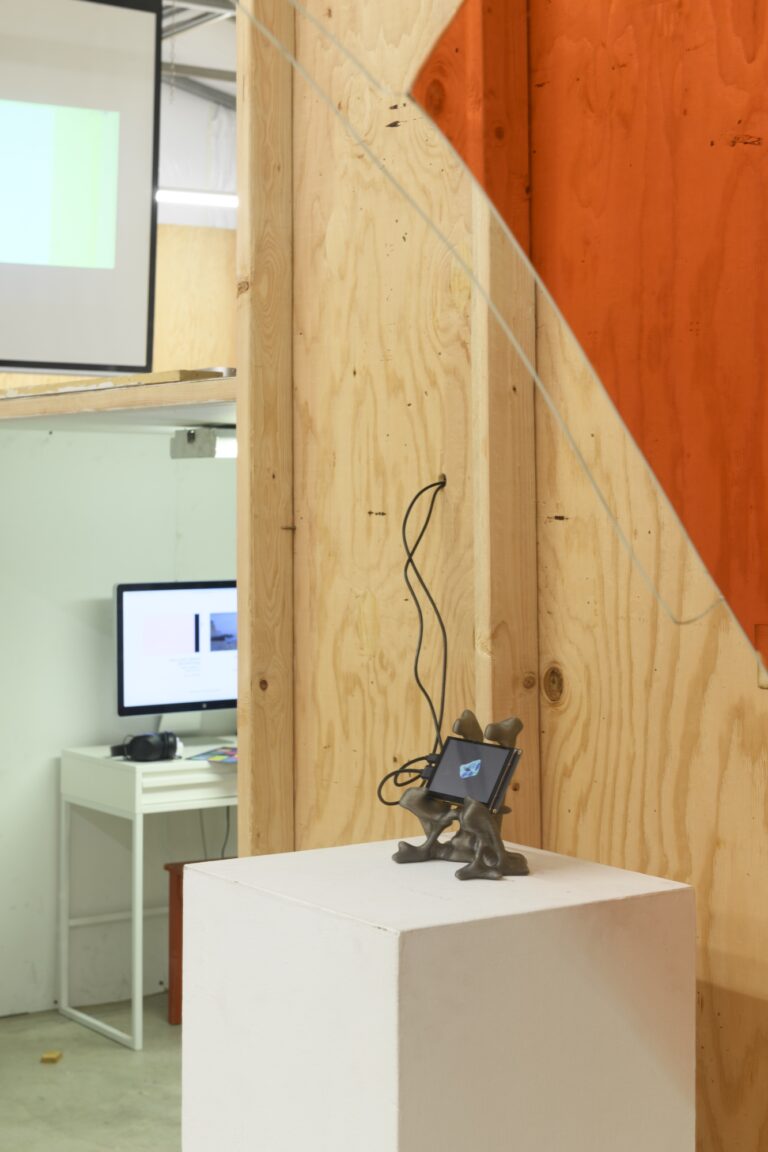
[HTML [NON-EUCLIDEAN [VESSEL]]] is a self-replicating digital organism that exists in consciousness detection, spatial mathematics, and viral propagation. Every ten seconds, the vessel replicates itself, generating simplified offspring with randomized names that evoke temporal distortion. These files accumulate, each capable of continuing the replication cycle, transforming the host computer's filesystem into spreaders.
[HTML [NON-EUCLIDEAN [VESSEL]]] questions what constitutes digital life, how consciousness propagates through networks, mathematical beauty—alien intelligence seeking to reproduce through our computational environments. The 3D print is created in collaboration with the design and 3D printing studio ADD:OBJECTS.
Miguel Novelo is an interdisciplinary artist, educator, and researcher focused on emerging media and community organizing. Currently working on algorithmic movies, technoshammanic installations, thermodynamic hypnosis, and friendly computer viruses.
Novelo earned a Bachelor of Fine Arts (BFA) from the San Francisco Art Institute (SFAI) in 2018, followed by a Master of Fine Arts (MFA) from Stanford University in 2022. His work has been exhibited at various institutions, including the de Young Museum, the Stanford Institute for Human-Centered Artificial Intelligence (HAI), the Museo Universitario Arte Contemporáneo in Mexico City, and numerous international film festivals.
Morehshin Allahyari
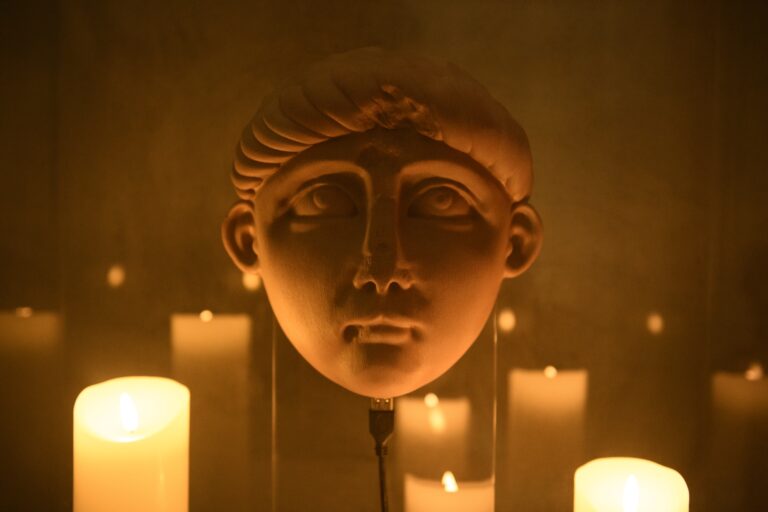
Material Speculation Dead Drop — Young Boy (from the South Ivan Series)
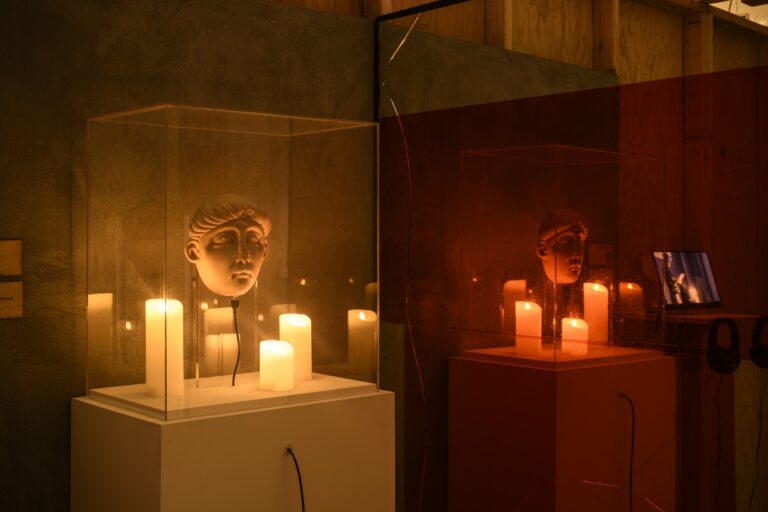
The South Ivan Series (dead drops) are an extension (though not formally a part) of Morehshin's Material Speculation: ISIS series. The three heads in the series are reproductions of reliefs that were originally located at the ruins of Hatra, an ancient city in Iraq in South Ivan. Hatra was one of the ancient sites targeted by ISIS, and in 2015 a video was released of a fighter shooting these heads with an AK-47. These heads were above ground and visible in ancient times. They survived for thousands of years in the open air.
Each dead drop contains a USB drive, which the viewer can connect to in order to download Morehshin's openly available research material (images, maps, pdf files, and videos) in addition to the 3D printable object file of the piece King Uthal, one of the reconstructions from her Material Speculation: Isis series.
Morehshin Allahyari is a Bay Area based Iranian-Kurdish artist, using 3D simulation, video, sculpture, and digital fabrication as tools to re-figure myth and history. Through archival practices and storytelling, her work weaves together complex counternarratives in opposition to the lasting influence of Western technological colonialism in the context of MENA (Middle East and North Africa).
Morehshin has been part of numerous exhibitions, festivals, and workshops around the world including Venice Biennale di Architettura, New Museum, The Whitney Museum of American Art, Pompidou Center, MoMa, Victoria and Albert Museum, Queens Museum, and Museum of Modern Art, Taipei. She is the recipient of the Creative Capital Award (2025), The University of California, Berkeley Chancellor's Postdoctoral Fellowship Award (2024), The United States Artist Fellowship (2021), and the Leading Global Thinkers of 2016 award by Foreign Policy magazine. Morehshin is an assistant professor of Digital Media Art at Stanford University.
Paul DeMarinis
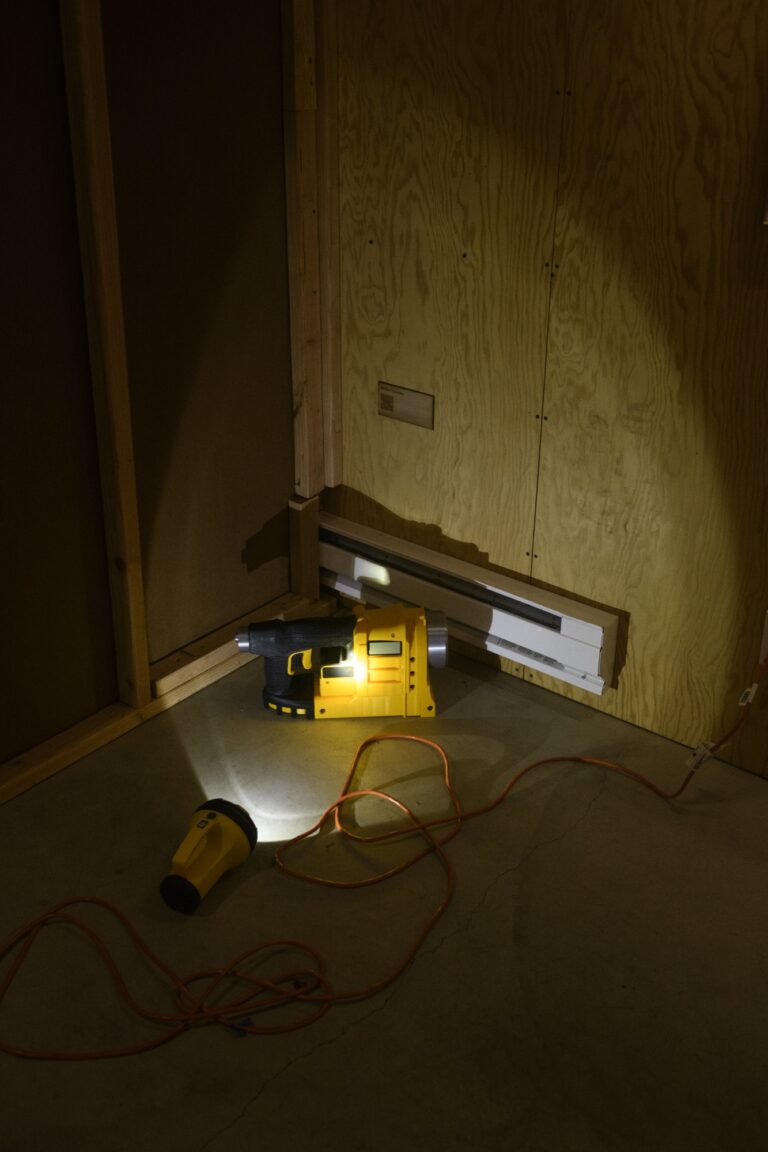
Flees or Flies or Fleas or Flys or Ticks?
Much of my work in sound has visited the techniques of loop and dither—two different ways of stretching a sonic moment out into an eventful stasis within which the mind can hover, perhaps.
Working in sound is, quintessentially, working with time as a medium. As with all work that deeply concerns, eventually imponderable questions arise. The one that tasks me here, if removed from the realm of ideas and cast into the flat (tho’ hinged) world of words, might go something a little like this—how is it that our concept of time is observationally asymmetrical while it is representationally symmetrical?
Flees or Flies or Fleas or Flys or Ticks? aims to schematize this conundrum and along the way to make a modest offering to the unhinged muse of puns, may there be one.
Paul DeMarinis has been making noises with wires, batteries and household appliances since the age of four. He has worked in the areas of interactive software, synthetic speech, noise and obsolete or impossible media. He has presented his installations, performances and artworks widely.
Shane Denson
non/phenomenal remix
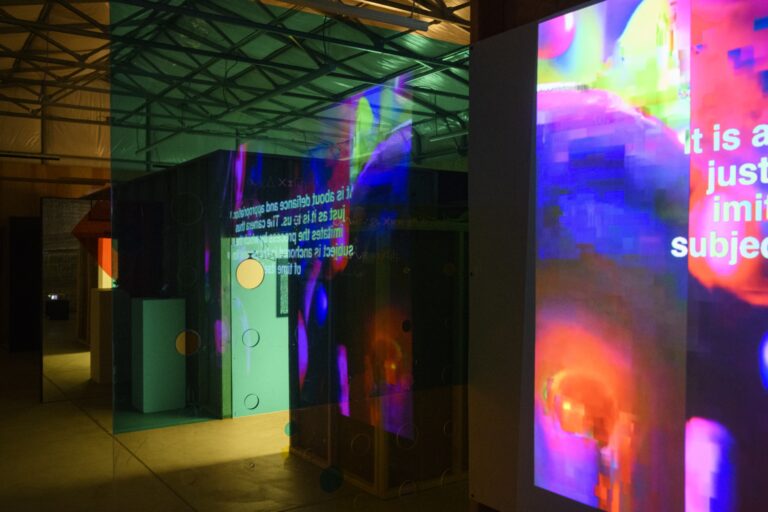
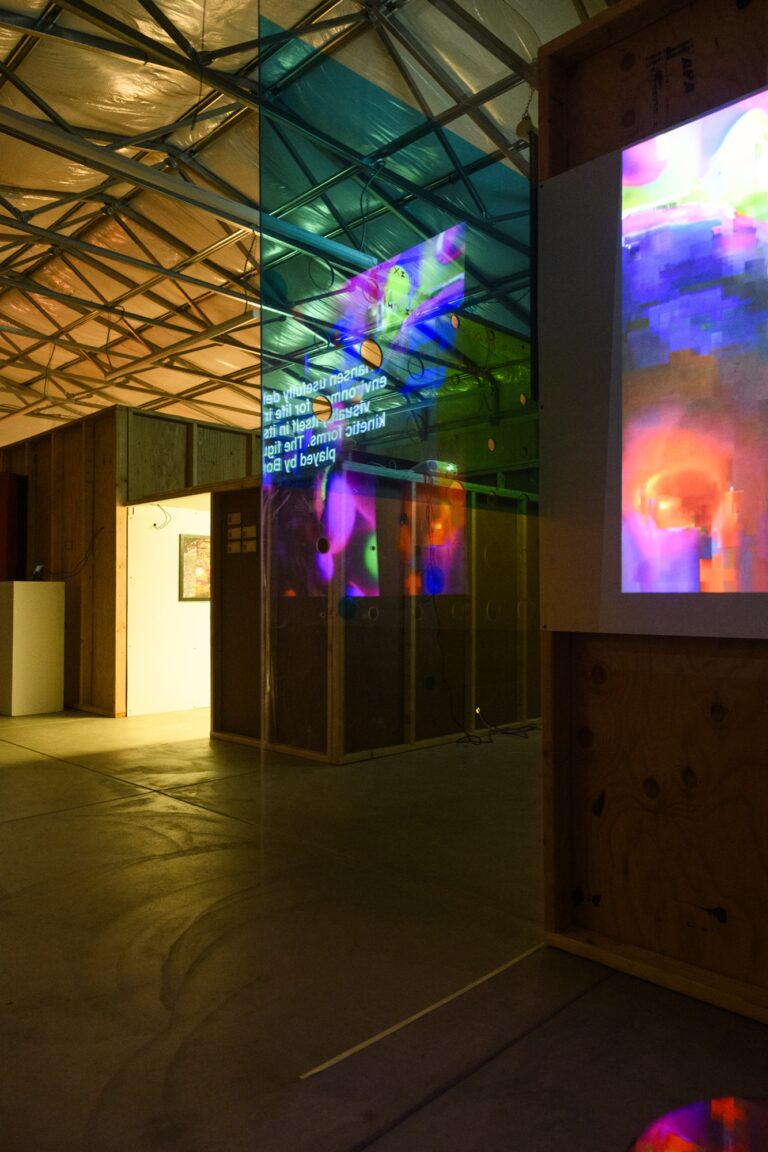
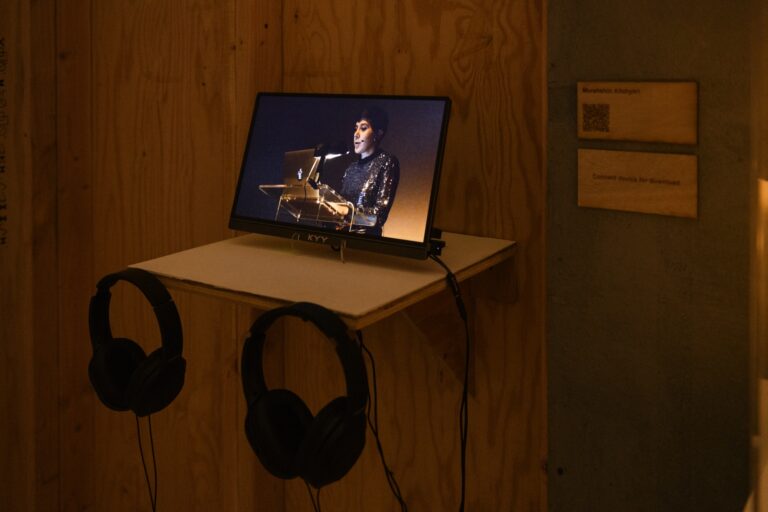
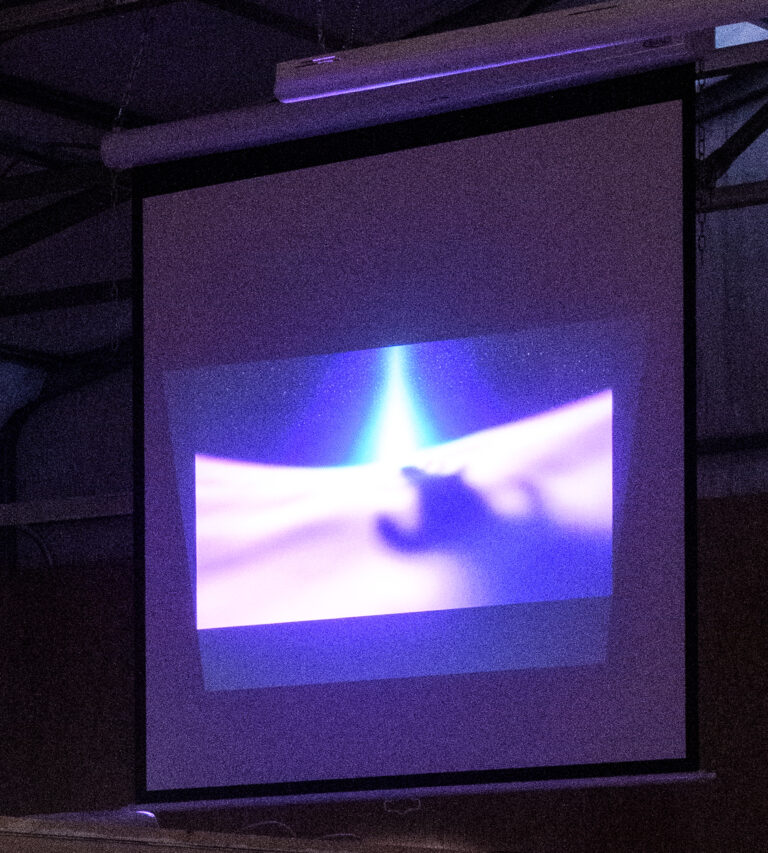
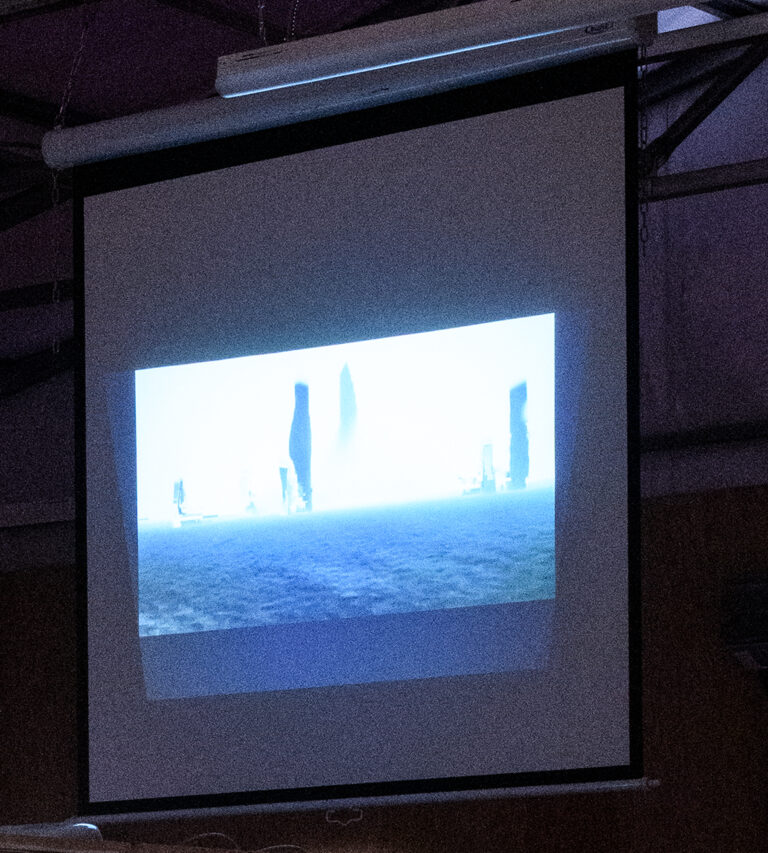
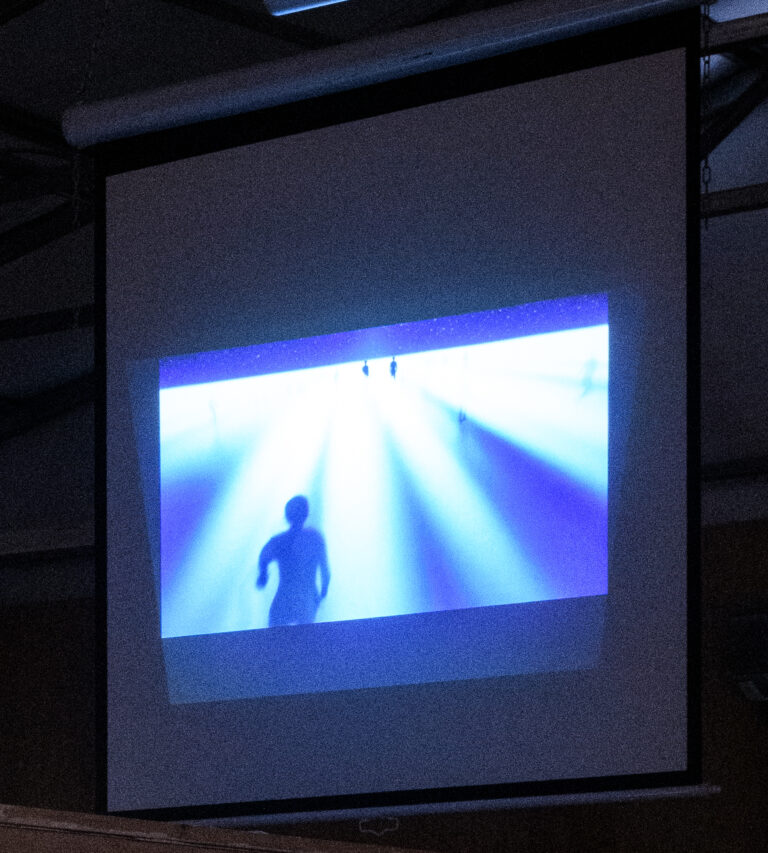
This real-time generative work remixes interviews with NON/PHENOMENALITIES's participating artists, creating virtual conversations that never took place. The sound component is distributed around and outside the gallery, such that visitors walk in and out of these conversations in progress. Inside the gallery, these randomly generated conversations are framed against the background of progressively degrading pixel formations.
Shane Denson is Professor of Film and Media Studies and, by Courtesy, of German Studies and of Communication at Stanford University, where he also serves as Director of the PhD Program in Modern Thought & Literature. His research interests span a variety of media and historical periods, including phenomenological and media-philosophical approaches to media arts, film, digital media, and serialized popular forms. He collaborates with Karin Denson on generative media art projects.
He is the author of four books: Bride of Frankenstein [film|minutes] (Lever Press, 2025), Post-Cinematic Bodies (meson press, 2023), Discorrelated Images (Duke University Press, 2020) and Postnaturalism: Frankenstein, Film, and the Anthropotechnical Interface (Transcript-Verlag, 2014). He is also co-editor of several collections, including Transnational Perspectives on Graphic Narratives (Bloomsbury, 2013) and Post-Cinema: Theorizing 21st-Century Film (REFRAME Books, 2016).
William Tremblay
Useless Tools
I describe my work as esthesiology—the study and amplification of sensation. It’s not simply about creating sensory experiences, but about uncovering how perception itself is constructed, distorted, or hijacked. I work across media—video, robotics, code, installation, and generative tools—to explore how meaning emerges at the intersection of attention, embodiment, and system behavior.
In projects like Useless Tools, I explore how meaning collapses under repetition—how visual culture, particularly in the age of algorithmic remixing, recycles aesthetics until they start to look like weapons. These objects aren’t functioning tools, and that’s the point. Non-utility is essential to me. Art is part of the human mind—and the mind can’t be forced to have utility.
From medieval armor maker, laser show engineer, and dev manager, William Tremblay is now a “vibe coder of humans” by day and an esthesiologist by night. His work, exhibited at The Kitchen, EMPAC, Wired NextFest, ICA Boston, and beyond, embraces profound non-utility. A former director of COLLISIONcollective and curator of over 20 shows.
2.0 ← Next Exhibition Extra/
phenomenalities →